
Answering the needs of bird owners seeking clean, hygienic cages, this guide highlights five top bird cage liner options. Each product is chosen for different cage sizes, materials, and ease of use, helping you pick the right liner for your parrots, canaries, finches, or cockatiels. Whether you want disposable plastic liners for easy cleanup or absorbent paper liners for odor control, there’s a suitable choice here. The buyer profiles below describe who benefits most from each liner. A quick summary table follows to compare key points at a glance.
| Product | Best For | Size/Material | Key Benefit |
|---|---|---|---|
| Niwaes Large Disposable Bird Cage Tray Liners | Large cages, parrots | 34″ x 22″, plastic | Thick plastic, elastic up to 59″ for snug fit |
| Okllen 200 Pcs Bird Cage Liners | General cages, multiple cages | 11″ x 20″, non-woven | Versatile, easy trimming |
| Vitakraft Cage Liners | Standard cages | 20″ x 18″, paper liner | Pre-cut and easy to fit |
| Firdnyohs 100PCS Bird Cage Liner Papers | Smaller to mid cages | 11″ x 20″, paper | Absorbent and tear-resistant |
| TORTO9 Cage Liner Sheets | High-volume liner needs | 11″ x 17″, paper | Environmentally friendly, multi-use |
Niwaes Large Disposable Liner — 34″ x 22″

The Niwaes liner set is built for large cages and bigger birds. Best for parrots, canaries, and other sizable cage occupants, it uses a thicker disposable plastic liner that helps monitor waste while protecting the cage bottom. This pack includes 30 liners along with a portable feeder, making routine cleanup straightforward. The elastic band closure expands up to 59 inches, fitting trays up to 34 by 22 inches. A strong point is visibility of droppings through the clear film, aiding quick waste assessment. A caution: thicker plastic may be less forgiving in unusually shaped trays and may require careful alignment to avoid gaps.
Okllen 200 Pcs Liners — 11×20

Okllen liners are designed for versatility across many standard cages. Each liner measures 11 by 20 inches, and the set comes in a bulk pack of 200 pieces. They are non-woven, non-toxic, and breathable, prioritizing bird health. They’re highly absorbent and leak-proof, helping keep trays dry and reducing maintenance time. The main advantage is the ability to trim to fit smaller cages; however, trimming requires careful measurement to avoid gaps that could trap waste. Best for owners with multiple cages or mixed bird types.
Vitakraft Cage Liners — 20″ x 18″
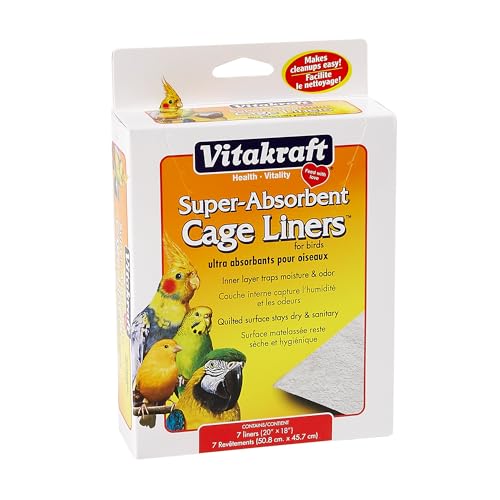
Vitakraft liners are pre-cut to 20 by 18 inches, fitting many standard cages with minimal adjustment. They promote a tidy habitat by absorbing moisture and curbing odors, contributing to a healthier environment for birds like parakeets and cockatiels. The ease of use makes these liners an appealing choice for daily maintenance. A limitation is that non-standard cage shapes may require trimming or folding beyond the pre-cut area to achieve a snug fit, which could affect stability if not properly secured.
Firdnyohs 100PCS — White 11×20
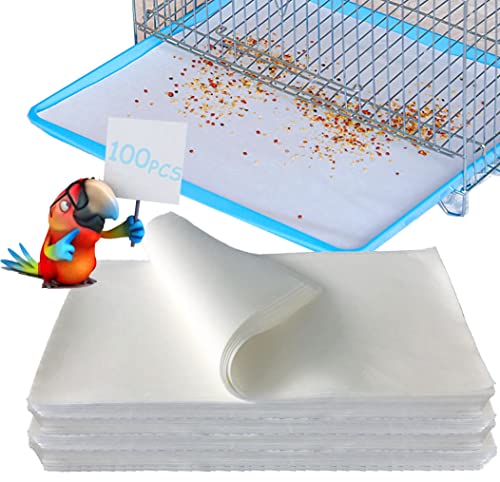
Firdnyohs liners come in a bulk 100-pack, sized at 11 by 20 inches. They’re described as tear-resistant and made from non-woven material, offering good durability and absorbency. These liners are suitable for pet birds like parrotlets and small cockatiels while providing a stable base that’s easy to cut for fit. A potential drawback is that papers can slide if not properly secured; consider using clips or a liner with an elastic edge to prevent shifting.
TORTO9 120 Sheets — 11 x 17

TORTO9 offers a high-volume option with 120 sheets at 11 by 17 inches. The paper liner is acid-free and non-toxic, designed for safe use as pet bedding or liner material. It supports easy customization via cutting and folding, enabling layering for extra absorption. This environmentally friendly option appeals to buyers seeking a lighter, recyclable approach. A limit is that larger cages may require combining sheets, which needs careful alignment to avoid leaks at seams.
Buying Guide: How To Choose The Right Bird Cage Liner
What cage size and shape do you have?
Measure the tray dimensions before buying. If you have an unusually shaped tray, consider liners with flexible edges or ones you can trim easily. For larger cages, disposable plastic liners may offer sturdier coverage; for smaller cages, paper liners provide easy customization.
Which material suits your cleaning routine?
Disposable plastic liners resist tearing and are quick to remove, ideal for busy households. Non-woven paper liners are highly absorbent and can help manage odors, though they may require more frequent replacement depending on waste volume.
Is odor control a priority?
All liners help with hygiene, but absorbent liners with moisture-wicking properties generally reduce odors more effectively. If odor control is crucial, look for liners marketed as highly absorbent and leak-proof.
How often will you replace liners?
High-frequency replacements favor bulk packs and inexpensive liners. If you have multiple cages or larger birds, plan for a higher liner turnover. Durable options with elastic edges can minimize shifting between changes.
What about eco-friendliness?
Paper liners, especially those marketed as environmentally friendly or recyclable, offer a lower environmental impact than thicker plastic liners. Consider combining eco-friendly liners with proper waste disposal practices.
Quick reference: Key considerations by product
- Niwaes: Best for large cages and parrots; thick plastic with elastic, easy waste visibility.
- Okllen: Best for multi-cage setups; versatile 11×20 size, bulk packing, breathable non-woven material.
- Vitakraft: Best for standard cages; pre-cut and simple to fit, good odor control.
- Firdnyohs: Best for small to mid cages; tear-resistant non-woven, absorbent, customizable.
- TORTO9: Best for high-volume needs; many sheets, eco-friendly paper, easy cutting and layering.
Maintenance tips
- Place liners securely to prevent sliding; consider clips or weight-anchored edges for stability.
- Check for dampness and replace promptly to reduce odor buildup.
- Keep spare liners on hand for quick changes during cage cleaning days.
Frequently Asked Questions
- Are disposable liners better than reusable liners? Disposable liners reduce cleaning time but create waste; reusable liners save resources but require washing.
- Can liners be cut to fit odd cage trays? Yes, most liners can be trimmed to fit different tray sizes with careful measurement.
- Do liners affect bird health? Liners should be non-toxic and safe for birds; avoid liners with added fragrances or dyes that could irritate birds.
- How often should I replace liners? Replacement frequency depends on cage size, bird health, and waste volume; inspect daily and replace when soiled or damp.
- Can liners prevent cage odors completely? They help manage moisture and waste, but routine cage cleaning is still essential for odor control.
- Which liner is best for a single parrot in a standard cage? A mid-size, easily trimmed liner such as the Vitakraft or Okllen options often provides a balance of fit and absorbency.