
When a queen is nursing, her nutritional needs shift to support milk production and the rapid growth of newborn kittens. The best options prioritize energy, protein, vitamins, and digestibility, while easing the transition from milk to solid food for kittens. This guide highlights five top picks that are well-suited for pregnant or nursing cats and their developing litters. It also helps buyers compare textures, formats, and feeding styles to match different queen cats and kitten temperaments.
| Product | Why It Matters | Best For |
|---|---|---|
| Royal Canin Mother & Babycat Dry Cat Food, 6 lb | Supports mother cats and newborn kittens with a rehydrating kibble and immune-supporting antioxidants. | Nursing queens needing easy-to-chew kibble |
| Royal Canin Mother & Babycat Ultra Soft Mousse in Sauce Cat Food (Pack of 12) | Soft texture that’s easy to eat for kittens with developing teeth and moms who prefer wet food | Kittens 1-4 months old and nursing queens |
| Royal Canin Mother & Babycat Ultra Soft Mousse in Sauce Cat Food (Pack of 6) | Compact packaging, same benefits as the 12-pack for smaller households | Small households with nursing queens |
| Purina Fancy Feast Tender Ocean Whitefish, Turkey, Chicken and Salmon Feasts (Kitten Pack, 24 x 3 oz) | Variety pack with real proteins and no artificial colors or preservatives | Water-rich wet meals for kittens transitioning from milk |
| Hartz Powdered Kitten Milk Replacer Formula, 11 oz | Quick-mix milk replacement that supports early kitten development when mother’s milk isn’t available | Kittens needing supplemental feeding |
Royal Canin Mother & Babycat Dry Cat Food, 6 lb
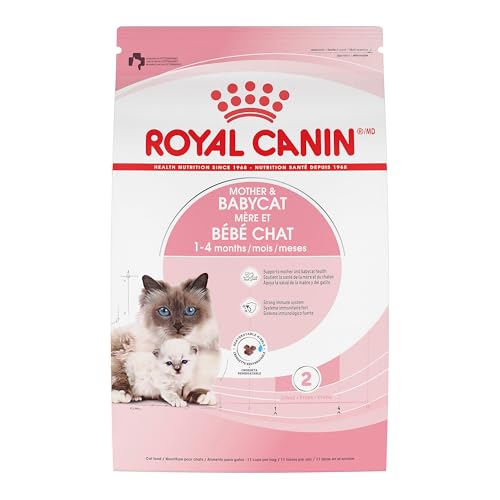
Best for: queens who prefer a dry kibble and households that want long-term storage. This dry formula is designed to support both nursing mothers and very young kittens (1–4 months) by delivering protein, energy, and antioxidants that help immune development. The kibble is rehydratable, making it easier for young mouths to chew as kittens grow. The formulation supports the transition from milk to solid food and serves as a reliable daily staple during the early weeks of a litter’s life.
Why selected: It targets the dual needs of a nursing queen and her newborns, with a clinically supported antioxidant blend to bolster kitten immune health. The dry kibble is practical for households seeking a straightforward feeding routine and can be paired with wet foods for variety.
Caution: Some cats may prefer wetter textures initially; pairing with a complementary wet food can ease the transition for kittens and ensure adequate hydration.
Royal Canin Mother & Babycat Ultra Soft Mousse in Sauce Cat Food, 3 oz (Pack of 12)

Best for: kittens with developing teeth and nursing queens who benefit from a soft texture. This wet mousse helps kittens transition from milk to solid food and provides moisture that supports hydration. The formulation includes antioxidants and vitamins to support growth and immune health.
Why selected: The ultra-soft texture reduces chewing resistance for newborns, while still delivering nutrition aligned with Royal Canin’s Mother & Babycat program. It complements a dry base diet well for mixed feeding strategies.
Caution: Wet food has a shorter shelf life after opening; plan portions accordingly to minimize waste and ensure freshness for all kittens.
Royal Canin Mother & Babycat Ultra Soft Mousse in Sauce Cat Food, 3 oz (Pack of 6)

Best for: households needing a compact, premium wet option in a smaller pack. This product mirrors the 12-pack in texture and nutrition, but is sized for smaller families or trial use. It supports kittens and nursing queens with a soft, easy-to-eat consistency.
Why selected: It provides the same essential nutritional framework as the larger pack, ensuring consistency for kittens transitioning through the 1–4 month window while supporting lactation in the queen.
Caution: Check for any changes in kitten appetite or growth and adjust portions to align with the queen’s milk production and kitten needs.
Purina Fancy Feast Tender Ocean Whitefish, Turkey, Chicken and Salmon Feasts Wet Kitten Food Variety Pack

Best for: kittens who benefit from a moisture-rich diet and queens who appreciate a varied protein profile. The pack includes real ocean whitefish, turkey, chicken, and salmon without artificial colors or preservatives, delivering balanced kitten nutrition and hydration.
Why selected: Variety helps ensure kittens receive diverse protein sources during a critical growth phase, while assisting nursing queens by offering palatable options that encourage adequate intake in young kittens. This product is a versatile complement to dry food during weaning.
Caution: Wet foods vary in texture and aroma; introduce new flavors gradually to avoid feeding-related stress or refusals in finicky kittens.
Royal Canin Queen Dry Cat Food, 3 lb
Best for: queens in later stages of nursing or moments when a lighter daily diet is preferred, offering a compact dry option with immune-supporting antioxidants. This formula continues to support kitten development through the pre-weaning window and keeps a nursing queen well-nourished.
Why selected: It mirrors the Mother & Babycat nutrition framework in a smaller bag, making it a convenient ongoing option for homes with multiple nursing females or recurring litters.
Caution: Monitor weight and appetite in nursing queens; adjust portions if milk production appears to decline or if kittens are growing quickly and needing more calories.
Buying Guide: Key Considerations For Nursing Cats And Litters
- Texture preferences: Dry kibble vs. wet mousse. Dry is long-lasting and convenient; wet foods support hydration and are often easier for kittens with developing teeth. Consider a mixed feeding plan to balance nutrient intake and pallet comfort.
- Protein and energy density: Nursing queens require higher energy and protein to sustain milk production. Look for foods with higher protein percentages and targeted nutrients such as antioxidants for immune support.
- Transition support: Kittens move from milk to solid food between weeks 4 and 8. Wet textures and soft mousses help ease this transition and reduce feeding stress for new kittens.
- Hydration: Wet foods contribute to daily water intake, which is important for nursing cats and kittens. If using dry kibble, ensure constant access to fresh water.
- Shelf-life and storage: Dry formulas store longer and are practical for busy households. Wet foods require refrigeration once opened and should be used within a few days.
- Portion control: Nursing mammals have variable appetite. Start with recommended portions and adjust as milk production and kitten growth dictate.
- Pairing strategy: Combine a dry base with wet toppers to provide variety and a range of textures, improving acceptance for both queen and kittens.
- Allergen considerations: If your queen or kittens have dietary sensitivities, read ingredient lists for potential triggers and consult a veterinarian for alternative formulas.
FAQ
- Q: What should I feed a nursing queen? A: A balanced diet with high-quality protein, energy, and antioxidants is ideal. Many owners use Royal Canin Mother & Babycat products combined with a wet option to ensure hydration and palatability.
- Q: When should kittens begin solid food during nursing? A: Kittens typically begin transitioning to solid foods around 3–4 weeks, with continued solid food feeding through 6–8 weeks.
- Q: Can I feed wet food exclusively to kittens? A: Wet food is excellent for hydration and palatability, but a mix of wet and dry can provide a complete nutrient profile and dental benefits as they grow.
- Q: How do I know if my queen needs more calories? A: Observe milk production, kitten growth, and the queen’s body condition. If kittens seem underfed or the queen is losing weight, increase portion sizes or consult a vet.
- Q: Are these products safe for long-term feeding? A: Yes, these products are designed for extended use with appropriate rotation and monitoring for any changes in appetite or kitten development.
- Q: Should I consult a vet before changing a nursing cat’s diet? A: Yes. A veterinarian can tailor recommendations to your cat’s health, litter size, and growth rate for optimal outcomes.