
Looking for effective ceramic heat emitter domes to keep reptiles warm and comfortable? This guide highlights five top domes and fixture combos that pair ceramic heat emitters with durable domes, reflecting heat efficiently, and offering reliable on/off or thermostat-controlled options. Each product below supports up to 150W and is designed for common tanks and terrariums. The following selections emphasize safety, heat distribution, and ease of use for bearded dragons, snakes, turtles, lizards, and other reptile species.
Summary of chosen products:
- ReptiKing Reptile Light Fixture, 5.5″ Standard Dome with Ceramic Socket
- Reptile Heat Lamp Fixture with Dimming Thermostat, 5.5″ Dome
- PTSCBS 8.5-Inch Standard Lamp Dome for Reptile Heating Lamps
- DXOPHIEX 5.5-Inch Deep Reptile Light Fixture with Thermostat
- BOEESPAT 5.5-Inch Deep Dome with Switch and Reflecting Cover
ReptiKing 5.5″ Standard Dome With Ceramic Socket

The ReptiKing Reptile Light Fixture uses a heat-resistant ceramic socket compatible with ceramic heat emitters and basking bulbs up to 150W. Its extra-deep aluminum reflector dome increases light and UVA output, promoting a robust basking zone. An On/Off switch mounted on a long 6-foot power cord adds convenience for quick adjustments without disturbing the enclosure.
With solid construction and a dual-use design, this fixture supports reliable heat distribution while protecting components from high temperatures. It’s an ideal starter dome for small to medium terrariums requiring stable, heat-focused illumination.
ReptiKing 5.5″ Dome With Dimming Thermostat

This all-in-one ReptiKing solution combines a 5.5″ dome with a dimming thermostat, making it ideal for controlling ceramic heat emitters and basking bulbs. It supports up to 150W and is suitable for bearded dragons, snakes, turtles, and other reptiles. The thermostat provides precise heat levels to maintain optimal basking temperatures without overheating.
Versatility stands out here: the fixture accommodates various heat sources, including radiant heat panels and more traditional bulbs. The included thermostat enables consistent conditions across day-night cycles, reducing manual adjustments while supporting healthy habitat temperature gradients.
PTSCBS 8.5-Inch Standard Dome For Reptiles
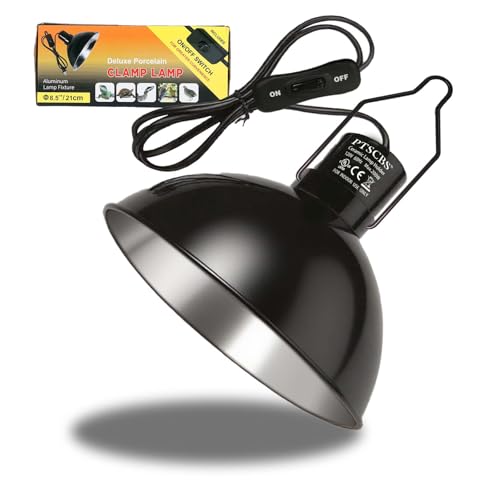
The PTSCBS dome offers universal compatibility with basking bulbs, UVB lamps, ceramic heat emitters, and more, supporting up to 200 watts. Its metal construction and high-temperature ceramic E26 socket resist melting and fire hazards, making it suitable for long-term use in reptile enclosures. The secure clamp and stable base help position the dome securely on tanks of varying thicknesses.
This dome emphasizes safety and durability in a compact 8.5-inch footprint. It is well-suited for multi-species setups where reliable heat and UV exposure are required. The robust design helps maintain consistent temperatures for active basking and daily cycles.
DXOPHIEX 5.5-Inch Deep Reptile Light Fixture

DXOPHIEX offers a thermostat-enabled 5.5-inch deep fixture designed to run bulbs up to 100W. It supports precise temperature control with a built-in sensor and a 24-hour cycle timer that includes 2, 4, 8, and 12-hour options. This ensures a consistent day-night cycle and heat distribution in diverse terrarium setups.
Suitable for turtles, frogs, geckos, snakes, and lizards, the DXOPHIEX fixture emphasizes reliable, programmable heating. The ceramic E26 head provides durability and compatibility across a range of heating sources, enabling a flexible reptile habitat design.
BOEESPAT 5.5 Inch Deep Dome With Switch

BOEESPAT’s deep 5.5-inch dome features premium aluminum construction with a polished interior to boost UVA and UVB output. It supports a variety of bulbs, including ceramic heat emitters up to 150W, with heat-resistant E26 sockets designed for heavy use. The fixture includes a switch, adding control convenience for quick temperature adjustments while maintaining stable heat output.
Ventilation holes on the top aid heat dissipation, contributing to bulb longevity and consistent performance. The deep-design dome provides enhanced heat reflection, making it a strong option for compact, multi-species terrariums where precise heat management is essential.
Buying Guide — Key Considerations For Ceramic Heat Emitter Domes
- Heat output and compatibility: Look for domes that support ceramic heat emitters and basking bulbs up to 150-200W, depending on enclosure size and species.
- Thermal control: Thermostats or dimming controls help prevent overheating. Consider whether you need a simple on/off switch or a programmable timer.
- Material and durability: Ceramic sockets resist high temperatures; metal domes with reflective interiors boost heat distribution and UVA/UVB output.
- Connectivity and mounting: Check clamp strength, base stability, and whether the fixture fits your tank thickness. Swivel or adjustable mounts improve placement flexibility.
- Maintenance and safety: Sealed components, heat resistance, and proper ventilation help reduce failure risks and extend bulb life.
- Size and footprint: Match dome size to tank dimensions and the reptile’s basking area. Deeper domes can improve heat dispersion in tighter spaces.
When selecting a ceramic heat emitter dome, prioritize products with robust materials, reliable heat control, and flexible mounting options. For setups requiring precise daily temperature regulation, a thermostat-enabled fixture can offer consistent, safe heat without constant manual adjustments. If you need rapid warm-up and easy on/off operation, a simple switch-equipped dome can be effective. Considering tank size, species, and basking zone requirements will guide the best overall choice for a secure, heat-stable habitat.