
When a dog develops urinary crystals or stones, selecting the right food is a common concern for owners. This guide highlights five evidence-based options that aim to support urinary health, reduce crystal formation, and manage stone risk. Each product is chosen for specific needs—whether you’re seeking a veterinary diet, a prescription-style formula, or a clinically oriented dry food. This article explains who each option is best for and why, with practical buying considerations and a concise comparison table.
Product Comparison Snapshot
| Product | Main Benefit | Best For | Limitations |
|---|---|---|---|
| Forza10 – Limited Ingredient Urinary Health | Non-GMO, fish-based formula with urinary-supporting ingredients | Dogs needing limited-ingredient options and urinary support | May be less familiar to some buyers than mainstream brands |
| Hill’s Prescription Diet c/d Multicare Urinary Care Dry | Antioxidants, potassium citrate, omega-3s for urinary health | Dogs with prior urinary issues needing structured management | Prescription diet typically requires veterinary guidance |
| Purina Pro Plan Veterinary Diets UR | Urinary environment unfriendly to crystals; supports stone dissolution | Dogs at risk of struvite or calcium oxalate crystals | Vet-focused formula; availability may vary by region |
| Hill’s Prescription Diet u/d Urinary Care Dry | Bladder health support with controlled high-digestibility protein | Dogs at risk for urate and cystine stones | Prescription-only; requires vet supervision |
| Royal Canin Veterinary Diet Urinary SO (Dry) | Dental-like urinary support with S.O. Index for bladder health | Dogs with urinary concerns needing veterinary-exclusive diet | Typically prescription-based; limited availability without vet |
Forza10 – Limited Ingredient Urinary Health Formula

Forza10 presents a trusted Italian approach to urinary health with a focus on limited ingredients. This formula uses wild-caught anchovies and cranberry support to help maintain urinary wellness. It is non-GMO and free from wheat, soy, artificial colors, and preservatives. Best for dogs needing a simplified protein source and urinary support, especially those with dietary sensitivities or history of cystitis. A caveat: some pets may require a veterinarian-guided transition to a new diet, and the product’s limited-ingredient profile may limit ingredient variety for some owners.
Hill’s Prescription Diet c/d Multicare Urinary Care Dry Dog Food

Hill’s c/d Multicare Urinary Care is a veterinary-formulated dry food designed to support urinary health. It includes antioxidants, potassium citrate, and omega-3 fatty acids, and is formulated to help dissolve certain stones. This option is best for dogs with established urinary concerns where a medically guided diet plan is advised. A limitation is that it requires veterinary approval and ongoing prescription management, which may limit immediate access for some owners.
Purina Pro Plan Veterinary Diets UR Urinary Ox/St Canine Formula

This Purina Pro Plan Veterinary Diets UR formula emphasizes creating a urinary environment unfavorable to both sterile struvite and calcium oxalate crystals. It is designed as a dry dog food that supports dissolution of struvite stones and recurrence prevention. It’s a strong choice for dogs with urinary crystal risk where a clinically oriented diet is preferred. A potential limitation is that some dogs may require a slower transition to avoid digestive upset, and product availability can vary by retailer.
Hill’s Prescription Diet u/d Urinary Care Dry Dog Food

Hill’s u/d option focuses on bladder health with controlled protein and purine content to minimize stone risk while supporting kidney and urinary tract function. It suits dogs with a history of urate or cystine stones and provides a comprehensive nutrient profile for urinary management. Choose this if your veterinarian recommends a low-purine diet; avoid this if a non-prescription product is necessary due to cost or access considerations.
Royal Canin Veterinary Diet Canine Urinary SO Dry

Royal Canin Urinary SO Dry is a veterinary-exclusive formula designed to support bladder health and reduce crystal formation. It uses RSS methodology to bolster urinary health and lower stone risk. It’s a robust choice for dogs with diagnosed urinary concerns under veterinary guidance. A limitation is that this is a prescription-grade diet, requiring vet involvement and ongoing monitoring for best results.
Royal Canin Veterinary Diet Urinary SO Moderate Calorie (Wet/Flavor)
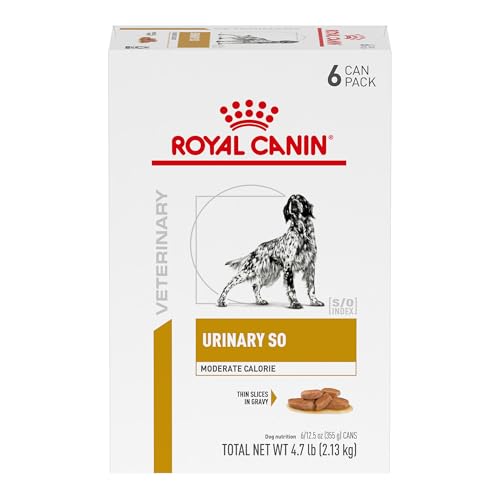
This Royal Canin moist option targets dogs prone to weight gain while addressing urinary health concerns. It helps dissolve and prevent stones with a moderate-calorie formula. Best for dogs needing calorie control alongside urinary support. Note that as a veterinary diet, it typically requires veterinary supervision and prescription access.
Buying Guide: How to Choose The Right Urinary Health Dog Food
- Determine if you need a prescription diet. If your veterinarian recommends a specific urinary-focused plan, prescription or veterinary-diet formulas (Hill’s u/d or c/d, Purina UR, Royal Canin Urinary SO) are the primary options.
- Identify your dog’s stone type risk. If your dog has a history of struvite or calcium oxalate stones, formulas designed to dissolve or prevent these stones are preferred.
- Consider form and palatability. Dry foods are easy to store; wet formulas can help with hydration and palatability for picky eaters. Some dogs prefer paté or sliced textures in the renal-focused lines.
- Check ingredients relevance. Limited-ingredient options (like Forza10) can suit dogs with dietary sensitivities, while many veterinary diets emphasize specific minerals, citrate, and antioxidant profiles to support urinary health.
- Plan a transition strategy. Move gradually from current food to a new urinary health formula to minimize digestive upset. Follow your vet’s guidance for transition timelines.
- Monitor hydration and urination. Adequate water intake supports urinary health; discuss with a veterinarian whether to adjust portion sizes or feeding frequency.
- Assess affordability and access. Prescription diets may require a vet visit, ongoing refills, and retailer availability; plan for long-term use and scheduling.
FAQ: Quick Answers For Urinary Health Diets
- Can dogs on a urinary diet eat treats? Some veterinary diets have approved treats or treats that are compatible; always confirm with your veterinarian to avoid disrupting stone management.
- Do these foods dissolve existing stones? Some formulas are designed to help dissolve certain stones and prevent new ones. Always consult a vet for stone-dissolution expectations based on stone type.
- Are these diets suitable for all breeds? Most urinary-focused diets are appropriate for many dogs, but breed, age, and health status can influence suitability. Vet guidance is recommended.
- How long should a dog stay on a urinary diet? Duration varies by diagnosis and response. Long-term management is common, with periodic veterinary reassessment.
- Is raw feeding compatible with urinary health diets? Raw feeding is generally not recommended when treating urinary stones due to the risk of inconsistent mineral balance; consult a veterinarian.
- What indicators show a diet is working? Fewer bladder discomfort episodes, stable urine parameters as advised by a vet, and no new stone formation are typical signs of improvement.