
Discover extra-wide litter boxes that accommodate large cats and multi-cat households. This guide highlights five top options, explaining who each product is best for and why it stands out. Use these clear, concise descriptions to compare size, ease of cleaning, and mess containment.
Summary of selected products:
| Product | Best For | Key Benefit |
|---|---|---|
| IRIS XX-Large Open Top | Large breeds and multi-cat homes | High sides minimize spray and scatter; roomy interior |
| IRIS XX-Large Side Entry | Space-conscious layouts | Easy entry with generous interior and spill containment |
| Enclosed Stainless Steel Litter Box | Odor control and durability | Stainless steel for easy cleaning and odor resistance |
| 2 Packs Stainless Steel Litter Box | Multi-cat households needing backups | Two large boxes with high sides for less tracking |
| Amazon Basics No-Mess Hooded Box | Budget-friendly, odor control | Hood and carbon filter reduce odors; easy access |
IRIS USA XX-Large Open Top Cat Litter Box

Best for: Large cats such as Maine Coons or Savannahs, and households with multiple cats needing extra space. This open-top design provides ample room for turning and digging, reducing daily mess from scatter.
- XX-Large size: 30″L x 20″W x 14″H.
- High walls help contain spills and litter scatter.
- Smooth interior simplifies cleaning and maintenance.
Caution: While easy to clean, an open top may allow litter to be kicked onto surrounding areas if not placed on a contained surface.
IRIS XX-Large Side Entry Cat Litter Box

Best for: Space-constrained rooms that still need a roomy litter area. The side-entry design offers easier access while preserving internal space for larger cats.
- Open top with 30″ L x 20″ W x 14″ H footprint.
- High walls reduce scatter and keep the area cleaner.
- Smooth interior for straightforward cleaning.
Caution: Side-entry may require slightly more floor space to accommodate the entry angle in tight rooms.
Enclosed Stainless Steel Litter Box with Lid

Best for: Cat owners seeking durability and odor control with a spacious interior for larger cats. Stainless steel construction resists odors and is easy to sanitize.
- XL size: 23.5″ x 15.6″ x 13″.
- High-sided enclosure helps contain spills and urine leakage.
- Durable, rust-resistant steel with easy cleaning.
Caution: Open-top style is not ideal for cats who prefer privacy or for households needing extra odor containment beyond the lid design.
2 Packs Stainless Steel Litter Boxes with High Sides

Best for: Households with multiple large cats or for owners who want a backup box. The two-pack setup provides ample space and reduces the risk of sharing or waiting time between uses.
- Single box: 23″ L x 14.61″ W x 9.9″ H; two-pack.
- Stainless steel offers durability and odor reduction.
- High 9.9″ walls help contain litter scatter and tracking.
Caution: Check space to ensure both boxes fit side by side or in accessible locations; larger boxes require more floor space.
Amazon Basics No-Mess Hooded Enclosed Cat Litter Box
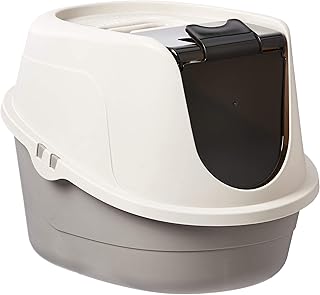
Best for: Budget-conscious buyers who still want odor control and contained mess. Hooded design with a swinging door provides privacy for the cat and helps reduce tracking.
- Large footprint: 24″ x 18″ x 17″.
- Hooded top with swinging door for easy access and containment.
- Pre-installed carbon filter aids odor control; replacement filters available.
Caution: Hooded enclosures can be harder to clean around the door area, and some cats may resist entering a covered box initially.
Buying Guide: Extra Wide Litter Boxes for Large Cats
What size is truly extra wide? Look for interior dimensions that provide at least 1.5 to 2 times your cat’s body length of space for comfortable turning and digging. For multi-cat households, consider two larger boxes to prevent territorial issues and reduce wait times.
Open vs. enclosed: Open boxes offer easier cleaning and better visibility, but enclosed models trap odors and require more frequent scooping. Enclosed or hooded boxes can improve odor control but may deter shy or privacy-seeking cats. Stainless steel tends to be the easiest to clean and the most durable, though it can be louder and require more careful placement.
Easy cleaning: Look for smooth interior surfaces with minimal crevices and a simple scoop access. A high lip or wall helps contain litter, but ensure the entry is accessible for your cat’s size and mobility.
Materials: Plastic boxes are lightweight and inexpensive but can retain odors and scratch easily. Stainless steel boxes resist odors and are durable, but they may be heavier and more expensive. If odor control is a priority, models with carbon filters or enclosed designs may help reduce smells.
Maintenance considerations: Consider how often you are willing to clean. Some boxes are designed for long gaps between cleanings, but multi-cat households typically benefit from easier maintenance and more frequent scooping to prevent mess and odor buildup.
Frequently Asked Questions
- What qualifies as an extra-wide litter box?
Extra-wide typically means a larger interior footprint or a deeper, taller design that accommodates big cats and multi-cat households. Look for boxes with at least 23 inches in length and 14 inches in width, with higher sides to reduce scattering.
- Are stainless steel litter boxes better than plastic?
Stainless steel boxes are easier to sanitize and odor-resistant, which can benefit busy multi-cat homes. They are more durable but heavier and pricier than plastic options.
- Is an open-top or hooded box better for odor control?
Hooded or enclosed boxes generally reduce odors due to containment and filters, while open boxes offer easier access and cleaning.
- How many litter boxes should a multi-cat household have?
Industry guidance suggests at least one box per cat plus one extra. For two cats, two to three boxes can help minimize litter box avoidance and mess.
- Should I choose two large boxes or one extra-large box?
Two large boxes often work better for multiple cats by reducing competition and distributing usage, though space and placement considerations matter.
- What maintenance habits help control odors?
Regular scooping, using liners or easy-clean interiors, and choosing boxes with odor-control features (like carbon filters) can help maintain a cleaner home.