
Looking for durable, safe fake eggs to guide hens to lay in the nest box? This guide compares top wooden and ceramic options to help you choose the right type for your coop. Best for beginners: simple, inexpensive wooden eggs. Best for durability: ceramic nest eggs that resist pecking. Best for decorative or educational use: varied wooden sets in multiple colors.
| Product | Material | Best For | Notes |
|---|---|---|---|
| Wooden Eggs Fake Eggs Nest Eggs (6 pcs) | Wood | Beginner coops; affordability | Durable and smooth; no odor |
| Wooden Fake Eggs-6Piece by Green FABWOOD | Wood | Decor and play areas; colorful display | Three colors; ships randomly |
| SallyFashion 7 Pcs Wooden Fake Eggs | Wood | Montessori-style play and teaching tools | Three colors; detailed finish |
| JolliLudo 12 Pcs Ceramic Nest Eggs | Ceramic | Anti-pecking training; long-term coop use | 12 pieces; realistic look |
| YunKo 6Pcs Wooden Fake Eggs | Wood | Coop decor and general use | Two sizes; natural wood |
Below are five products selected for relevance to “fake eggs for chicken coop.” Each entry offers practical details to help buyers pick the right option for their flock, coop size, and goals—whether training hens, decoration, or egg collection efficiency.
Wooden Eggs Fake Eggs Nest Eggs for Nesting Box

Material and size: Solid wood, about 5.5 cm x 4 cm (2.17 x 1.57 inches). These lifelike wooden eggs are smooth, durable, and drop-resistant. They have no strong odor, making them suitable for regular coop use. Best for small to medium coops prioritizing simplicity and longevity. Limitations: wooden eggs may require occasional repainting if finish fades with sun exposure.
Wooden Fake Eggs by Green FABWOOD

Overview: Wood eggs painted to resemble real eggs; includes three colors and ships randomly. Best for decorative displays in kitchens or children’s play food areas near the coop. Best for: adding varied visuals to nesting boxes or educational setups. Limitations: color variety may be inconsistent due to random shipping.
SallyFashion 7 Pcs Wooden Fake Eggs

Details: Set of 7 wooden eggs in three colors. Useful for Montessori-inspired sensory play and non-electrical learning activities. Best for households seeking a tactile, natural-material option that doubles as craft material. Why chosen: high-quality sanding and natural wood feel supports fine motor practice. Limitations: wood may show wear with heavy handling over time.
JolliLudo Ceramic Nest Eggs

Composition and purpose: Ceramic nest eggs, about 1.7 x 2.3 inches each, designed to be anti-pecking and durable. Best for preventing real egg breakage while guiding hens to the nesting area. Why chosen: ceramic construction resists pecking and provides a realistic weight similar to real eggs. Limitations: ceramic eggs can be heavier and may chip if dropped on hard surfaces.
YunKo 6Pcs Wooden Fake Eggs
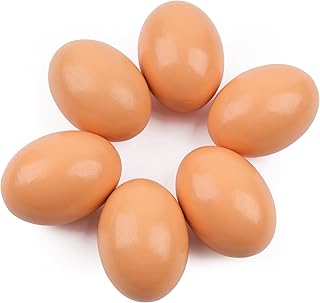
About: Brown wooden eggs, 2.36 x 1.58 inches (6 cm x 4 cm). Suitable for coop decoration or practical use in smaller coops. Best for those who want natural wood without bright color finishes. Best for: neutral decor and simple training setups. Limitations: natural wood may require periodic re-sealing to maintain finish in sunny coops.
Buying Guide
What material should I choose?
Wooden eggs are cost-effective and easy to handle, ideal for beginners or decorative uses. Ceramic eggs are more durable and pet- and pecking-resistant, suitable for busy coops and larger flocks. Consider your coop environment and how often eggs may be exposed to moisture or direct sunlight.
How many eggs do I need?
Start with a small set (6–7 eggs) to test hens’ behavior. If hens prefer laying in a specific spot, you can add more eggs gradually to reinforce the habit without overwhelming the nesting area.
Should I worry about safety or toxicity?
All listed items are designed for poultry environments. Ceramic eggs are non-toxic and durable. Wooden eggs should be finished with a safe, non-toxic sealant if used in humid or outdoor coops to prolong life.
What are the best uses beyond laying guidance?
Wooden sets are great for Montessori-style play and educational activities near the coop or kitchen. Ceramic eggs offer reliable pecking resistance and can help protect real eggs during training phases.
How do I maintain these eggs?
Regularly wipe or wash wooden eggs with a damp cloth and dry thoroughly. Avoid soaking wood to prevent cracking. Ceramic eggs only need gentle cleaning; inspect for cracks and replace if damaged to avoid sharp edges.
Summary of key considerations
- Durability: ceramic options for high-traffic nests; wooden eggs for general use and decor.
- Weight and feel: real-egg-like feel helps hens gravitate to nesting areas.
- Finish and color: consistent colors vs. random color shipment; decorative values vary.
- Size compatibility: ensure eggs resemble real eggs in size to avoid confusion for hens.
FAQ
- Q: Will fake eggs really change where my chickens choose to lay?
A: Yes, placing realistic-looking eggs in the nesting area can encourage hens to lay in that spot. - Q: Can I use these for eggshell training if I have a large flock?
A: Ceramic eggs are especially helpful for training larger flocks due to durability and anti-pecking properties. - Q: Are wooden eggs safe if my coop is outdoors?
A: Yes, but in exposure to sun and rain, apply a non-toxic sealant to extend life. - Q: How many colors should I choose for decoration or education?
A: Multiple colors can enhance visual interest and help with teaching patterns or selections. - Q: Do I need to replace fake eggs regularly?
A: Inspect for wear; replace if cracking or fading affects appearance or safety. - Q: Do fake eggs interfere with real egg production?
A: Properly placed nesting eggs guide hens without impacting production; avoid overcrowding nesting spots.