
In short, the best fish tank cleaning tools vacuum are siphon-style gravel cleaners that simplify water changes, debris removal, and gravel washing. These kits are ideal for casual hobbyists, busy owners who do weekly maintenance, and beginners who want a straightforward, hands-on way to keep tanks clear. The featured products below offer varied features—from multi-tool sets and manual pumps to electric gravel cleaners—so you can choose based on tank size, preferred effort level, and whether you want built-in filtration or extra scrubbing brushes. A quick comparison table is provided to help you pick quickly.
| Product | Best For | Key Benefit |
|---|---|---|
| QZQ Aquarium Gravel Cleaner | Small to medium tanks; beginner to intermediate | Multi-functional siphon with safety design |
| AQUANEAT 5-in-1 Cleaning Set | New hobbyists; easy all-in-one tool | Five tools in one for daily tasks |
| Tetra Water Cleaner Gravel Siphon | Typical maintenance; up to 55 gal tanks | Simple, reliable siphon with clear usage scope |
| Small tanks; flexible setup | Three independent cleaning heads for versatility | |
| AQQA 6-in-1 Electric Gravel Cleaner | Mid-to-large tanks; frequent changes | Electric pump for fast water changes |
QZQ Aquarium Gravel Cleaner [2026 Edition]
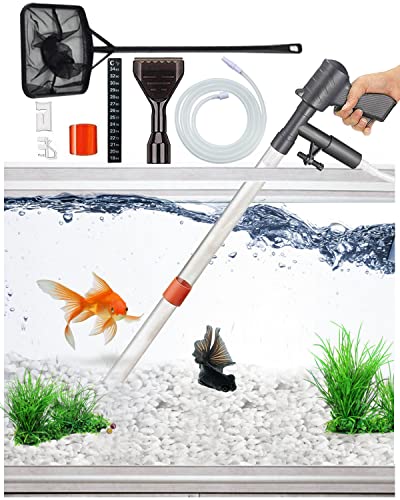
Best for: Small to medium tanks and hobbyists who want an all-in-one toolkit. This kit uses the siphon principle to handle gravel washing, debris removal, and water changes without needing electricity. The manual press design makes it silent and easy to start, which is ideal for apartments or quiet setups. The included filter net helps prevent fish and large gravel from being sucked out, reducing the risk of accidental losses.
Why selected: Its multi-function approach reduces the number of separate tools you need, keeping maintenance simple. The new safety design and durable air bag support quick, controlled water flow. The compact nature makes it a practical starter option for owners who maintain smaller tanks or want a backup tool for quick cleanups.
Best for cautious buyers: If you’re worried about accidentally sucking up fish or substrate, this kit’s filter basket and suction control design help mitigate that risk. A minor limitation is that it relies on manual pumping, which may be less convenient for very large tanks or frequent heavy waste loads.
AQUANEAT Aquarium Vacuum Siphon 5-in-1

Best for: New hobbyists who want an all-in-one cleaning solution. This set includes multiple top attachments that cover water changes, algae scraping, and debris removal in one workflow. It’s especially useful for those starting a freshwater setup who need a straightforward tool to handle routine maintenance without juggling several devices.
Why selected: The 5-in-1 approach minimizes tool clutter and provides a simple path to learn aquarium upkeep. It’s easy to use by squeezing a pump or switching heads, which speeds up regular chores. A potential limitation is that large, heavily soiled tanks may require additional suction power beyond the standard hand pump.
Tetra Water Cleaner Gravel Siphon
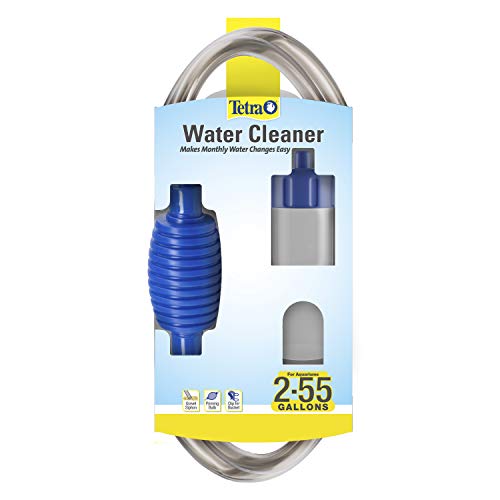
Best for: Home aquariums up to 55 gallons that need reliable, periodic water changes. Tetra’s gravel siphon is a straightforward tool designed for consistent use, making it suitable for hobbyists who perform routine monthly maintenance. It helps streamline the process of removing debris and replacing water without heavy effort.
Why selected: It’s a reliable choice for standard setups and does what it’s designed to do well—make monthly water changes easier. A caution: it’s a basic siphon without built-in filtration tweaks, so in tanks with heavier waste or nitrate challenges, you may still want an additional filter or water conditioner.
AREPK Compact Aquarium Siphon Vacuum Kit

Best for: Small tanks that need a customizable cleaning setup. AREPK’s kit emphasizes versatility with three independent cleaning heads and a smart design to reach tight spaces among rocks, wood, and plants. It supports efficient waste removal while avoiding tool tangling in decor.
Why selected: The separate cleaning heads and replaceable sponges enable a tailored cleaning experience, which helps achieve deeper cleaning without disturbing tank inhabitants. Limitation: the kit’s multiple components may require a bit more setup time for first-time users comparing to single-head options.
ORLYOBABE Siphon with Magnetic Glass Cleaner

Best for: Maintenance-focused users who want a magnetic glass cleaner integrated with siphon cleaning. This kit pairs a gravity-fed cleaning function with a magnetic cleaner for glass surfaces, supporting a two-step approach to keep both gravel areas and glass panels clear.
Why selected: The combination of siphon and magnetic glass cleaning offers a comprehensive approach to tank upkeep with fewer separate tools. A limitation could be the added weight of magnets and potential learning curve for first-time users pairing the devices together.
AQQA Electric Aquarium Gravel Cleaner

Best for: Medium-to-large tanks or frequent water changes where speed matters. The AQQA unit offers a 6-in-1 functionality that includes water changing, sand washing, debris removal, tank scrubbing, water filtration, and circulation, driven by a powerful 320 GPH pump.
Why selected: This electric option accelerates routine maintenance and reduces manual effort. The upgraded filter cup helps trap waste for healthier water. Caution: ensure the pump remains fully submerged during operation to avoid overheating or damage and follow safety instructions for use.
Buying Guide
What size tank do you have?
Gravel vacuum tools come in manual, semi-automatic, and electric forms. For small tanks (under 20 gallons), a compact, manual siphon often suffices. Medium tanks (20–40 gallons) may benefit from multi-head or semi-automatic kits. Large tanks (40–75+ gallons) typically require more powerful pumps or electric cleaners to keep up with waste and water changes.
Do you want an all-in-one tool or modular kits?
All-in-one sets simplify buying decisions but may limit customization. Modular kits let you mix and match heads, hoses, and attachments to better suit your tank layout, décor, and feeding schedules. Consider which approach minimizes clutter and maximizes cleaning efficiency for your routine.
Is built-in filtration or scrubbing important?
Some products offer sponge filtration or scrubbing brushes to clean tank walls and decorations. If algae buildup is a concern, look for brushes or sponges included with the main cleaning head. If you need faster turnover, electric models with higher flow rates can speed up water changes but may require more power management.
What about fish safety and noise?
Manual siphons are silent and gentle when used correctly. Electric pumps require submersion and can generate some noise or vibration. Ensure your chosen tool has a flow control feature to prevent sudden suction that could stress fish or disturb substrates.
Compatibility and ease of use
Check hose length, connector compatibility with standard aquarium tubing, and whether you need extra accessories like temperature stickers or nets. Look for durable materials, simple assembly, and clear instructions to shorten the learning curve for beginners.
Maintenance and replacement parts
Consider how easy it is to replace sponges, filters, or heads. A kit with readily available replacement parts can extend service life and reduce total cost of ownership over time. Some brands offer bundles with spare parts and cleaning tools to handle more tasks in one session.
Usage tips for best results
- Keep the intake low in the water column to maximize debris pickup without drawing up air.
- Always submerge electric cleaners fully before turning them on to prevent overheating.
- Rinse hoses and filter components after use to prevent residue build-up.
- Perform partial water changes regularly (e.g., 20–30% every 2–4 weeks) as recommended for your species.
FAQ
- Are these tools safe for active fish? Yes, when used properly, especially manual siphons with built-in filters.
- Can I use these in saltwater tanks? Most are designed for freshwater; check product specifics for saltwater suitability.
- Do these models require electricity? Some models are electric; many are manual siphons that do not require electricity.
- What tank size is best for a beginner? Tanks under 30 gallons are typically easiest to manage with a basic siphon kit.
- How often should I vacuum the gravel? For most freshwater tanks, aim for a partial water change every 1–2 weeks with gravel cleaning during the same session.