
Choosing the right fish tank heater with a thermostat is essential for stable water temperature, whether you keep tropical freshwater, bettas, or marine species. The products below are designed for submersion, automatic temperature control, and safety features to protect both fish and equipment. Each option supports common tank sizes and includes protections like overheat and out-of-water shutoff. Read through the quick buying guide after the picks to compare key specs and safety considerations.
Summary of Selected Products
| Product | Wattage Range | Compatible Tank Size | Key Feature |
|---|---|---|---|
| Orlushy Submersible Aquarium Heater | 300W | 40-55 gallons | Explosion-proof quartz glass, adjustable temp |
| HiTauing Upgraded 300W/500W | 300W / 500W | 40-75 gallons | Intelligent leaving-water stop, safety sensors |
| hygger Small Betta Heater | 10W / 25W / 50W / 100W | 1-16 gallons | LED display, dry-run protection |
| AQUANEAT 50W Heater | 50W | 5-15 gallons | External thermostat control |
| HITOP Adjustable Heater | 25W / 50W / 100W / 200W / 300W | Up to 15-20 gallons | 2mm quartz glass, adjustable |
Orlushy 300W Submersible Aquarium Heater
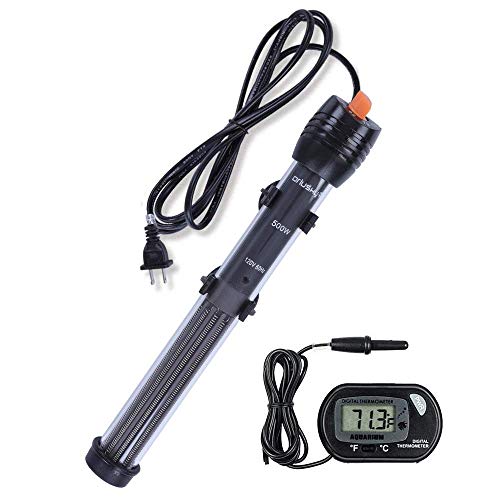
The Orlushy 300W heater is designed for medium-sized tanks, supporting 40 to 55 gallons. It features a 11-inch length and a 6-foot power cord, offering flexible placement. The unit uses 2mm thickened quartz glass and is described as explosion-proof, suitable for both freshwater and saltwater environments. An adjustable temperature dial allows incremental changes, though precise readings may vary slightly from the set point. This model includes two suction cups for secure mounting and a built-in thermometer accessory. It aims to blend with the tank while delivering steady heat.
Operational notes: The temperature adjustment area is visible on the heater body, enabling user control without frequent disassembly. While not marketed as ultra-precise, it provides easy adjustments to maintain stable conditions. Care should be taken to ensure the heater remains fully submerged during operation. The device is designed for simple concealment within typical aquascapes, helping maintain a clean tank appearance.
Safety and maintenance: Regular inspection of the power cord and seals is recommended. The quartz glass provides resistance to cracking, but any drop or impact should be checked. The unit is compatible with both saltwater and freshwater setups, expanding its versatility across hobbyist environments.
HiTauing Upgraded 300W/500W Heater

This HiTauing model comes in 300W or 500W variants, designed for 40-75 gallon tanks with a 110-120V supply. It features intelligent water sensors and over-temperature protection, automatically stopping heating if the water runs dry or if the temperature exceeds the set point. The heater shell combines explosion-proof quartz glass with a high-temperature ABS exterior for safety and durability. A long power cord (nearly 8 feet) aids placement flexibility, while the 63-94°F (17-34°C) range covers common tropical and temperate setups. The device emphasizes automatic safety alongside rapid heating capabilities.
Key points: The product includes a digital-friendly indicator and safety protocols to reduce risk in busy tanks. It’s suitable for saltwater and freshwater environments, with emphasis on preventing overheating and ensuring reliable operation over time. Regular calibration and inspection of sensors enhance long-term performance. The design aims to minimize water disturbance while maintaining consistent warmth for aquatic life.
hygger Betta Heater, 10W-100W with LED Display

The hygger line offers a compact heater range from 10W to 100W, designed for small aquariums up to about 5-26 gallons depending on the wattage. The unit uses premium quartz glass and a 2mm wall thickness for enhanced safety. It includes a dry-run and overheating protection system, with an LED display to monitor temperature status. This makes it a practical choice for nano tanks or betta setups where precise control is essential. As with all submersible heaters, placement and water level monitoring are important for optimal operation.
This heater supports both fresh and marine environments, with a protective build designed to minimize risks to small fish and invertebrates. Users should select the appropriate wattage for tank size per the included size chart to avoid under- or over-heating. The compact design helps reduce visual impact within smaller aquariums.
AQUANEAT 50W Aquarium Heater

The AQUANEAT 50W heater targets smaller tanks, rated for 5 to 15 gallons with a 6.75-inch body and a 3.6-foot power cord. The adjustable top dial makes it straightforward to set temperatures between 65°F and 89°F. A red indicator light signals when heating is active, and the device maintains a steady temperature once the target is reached. Suitable for both freshwater and marine environments, it provides a simple, reliable option for nano-to-small community tanks where space is limited and discreet equipment is preferred.
Operational considerations include ensuring full submersion and proper mounting. This model emphasizes straightforward use with a compact footprint. For hobbyists, it pairs well with a separate thermometer to verify accuracy in real-world conditions. Regular checks help maintain consistent warmth, which is critical for most tropical species.
HITOP Adjustable Heater, 25W to 300W

The HITOP family covers a broad wattage range from 25W up to 300W, with models suitable for up to 15 gallons. Its 2mm thick quartz glass and a 4.9-foot power cord provide safety and flexibility in placement. The adjustable temperature range (approximately 68 to 93°F) allows precise control for a variety of fish and plant combinations. The heater is designed to auto-start and stop with water temperature changes, reducing the risk of overheating or under-heating. Its rugged construction makes it a common choice for hobbyists with diverse tank setups.
Key considerations include ensuring you select the correct wattage for your tank size to optimize heating efficiency. The 2mm glass and protective shell contribute to safety and durability, but routine checks of the seal and mounting fixtures are advised. The product is compatible with typical home aquaria and supports both freshwater and saltwater systems, expanding its versatility.
Buying Guide: Key Purchase Considerations
- Tank size and wattage: Match the heater’s wattage to your tank volume. Undersized heaters struggle to reach the target temperature, while oversized units can cause overshoots and energy waste.
- Submersion and durability: Look for submersible models with robust quartz glass and protective housings. Explosion-proof or shatter-resistant designs reduce breakage risk in busy tanks.
- Safety features: Over-heat protection, dry-run or out-of-water shutoff, and automatic power-off when water is low are critical protections for both fish and equipment.
- Temperature control: An accurate thermostat, clear display, and easy-to-use adjustment controls help maintain stable conditions for diverse species.
- Placement and visibility: Slim profiles and hidden mounting options aid aesthetic integration. Ensure the heater is fully submerged and not blocked by decorations.
- Maintenance: Regular inspection of seals, power cord integrity, and sensor accuracy reduces failures. Consider pairing with an independent aquarium thermometer for verification.
- Saltwater vs. freshwater: Most heaters support both environments, but some models emphasize quick heat-up and corrosion resistance suitable for marine tanks.
- Safety around pets: Choose units with durable casings and proper insulation to minimize accidental contact or scalding.
In practice, select a model that aligns with your tank size, species needs, and maintenance routine. This approach helps sustain stable temperatures, reduces stress on fish, and supports overall aquarium health.