
Answering the common buyer question: which floating pellet fish food delivers balanced nutrition, color enhancement, and reliable sinking speed for varied fish species? This guide highlights five well-suited options and explains who they’re best for. Whether you keep goldfish, tropical community tanks, or koi in a pond, you’ll find a clear comparison to help you choose. Read on for practical guidance, concise specs, and a buying guide to optimize feeding routines and water quality.
Summary of selected products:
| Product | Best For | Notes |
|---|---|---|
| Tetra Goldfish Variety Pellets | Goldfish keepers seeking color and a staple daily diet | Floating, color-enhancing, bite-size |
| TetraCichlid Floating Pellets | Cichlid hobbyists needing a balanced, protein-rich formula | Floating, color enhancement |
| Hikari Tropical Semi-Floating Micro Pellets | Tropical community tanks with small fish | Semi-floating, micro size |
| Big Kahuna Pond Koi Food Pellets | Koi and large pond fish requiring larger pellets | Large pellets, high protein |
| Floating Goldfish Food Pellets (Antarctic Krill) | Goldfish with color focus and natural ingredients | Antarctic krill, spirulina |
Tetra Goldfish Variety Pellets, Balanced Diet

Best for: Goldfish keepers who want a complete daily staple with color-enhancing benefits. The formulation targets goldfish’s unique metabolism and color maintenance, making it a solid default feed.
Why selected: This product provides a nutritionally balanced diet with a mix of ingredients and added vitamins, minerals, and trace elements. Its floating, bite-size pellets are easy for goldfish to pick up at various tank levels.
Limitations: Primarily designed for goldfish; may not be ideal for community tanks with non-goldfish species that require different protein profiles.
TetraCichlid Floating Pellets
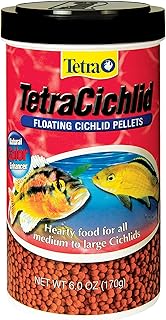
Best for: Cichlids in top- and mid-water feeding zones who need a protein-rich, nutritionally balanced diet with color enhancement.
Why selected: The formulation supports daily feeding with a focus on vitality and natural coloration. Floating pellets enable multi-level feeding, helping aquarists monitor intake across tank zones.
Limitations: Designed for cichlids; non-cichlid community tanks may require alternative protein levels or sinking options for bottom-dwellers.
Hikari Tropical Semi-Floating Micro Pellets

Best for: Small tropical fish in community tanks that benefit from micro-pellets providing energy without overloading the system.
Why selected: The semi-floating micro pellets are designed to be accessible to fish at all tank levels and to support diverse tropical species with larger energy reserves per bite.
Limitations: Not ideal for larger fish or ponds; may require smaller tanks or species with specific feeding rhythms to avoid overfeeding.
Big Kahuna Koi Food Pellets

Best for: Koi and larger pond fish needing robust growth and vibrant coloration with a higher protein profile.
Why selected: The formula emphasizes high protein (around 32%), a balanced fat and fiber mix, and large pellet size suitable for koi and bigger pond species.
Limitations: Large pellets may be challenging for smaller fish; ensure your pond residents can comfortably consume the pellet size to avoid waste.
Floating Goldfish Food Pellets with Antarctic Krill

Best for: Goldfish enthusiasts seeking natural ingredients and color-boosting components like Antarctic krill and spirulina.
Why selected: Rich in astaxanthin and spirulina supports enhanced color while providing high-quality protein and vitamins. The natural formulation appeals to goldfish keepers prioritizing color development.
Limitations: Ingredient emphasis on natural components may be less suited for non-goldfish species in mixed tanks; monitor appetite and water clarity with krill-rich formulas.
Buying Guide
What to consider when choosing floating pellet fish food:
- Species and life stage: Goldfish, tropical fish, cichlids, koi, and small community fish have different dietary needs. Choose a formula aligned with the target species and their feeding behavior.
- Pellet size and sinking speed: Floating pellets are best for surface feeders or mid-water fish, while semi-floating pellets help mid-and bottom-dwelling species. Consider the tank’s inhabitants and feeding patterns.
- Protein and fat content: Higher protein supports growth in active or larger fish, but excessive protein can affect water quality. Balance protein with fats and fiber based on species.
- Color-enhancing ingredients: Natural pigments like astaxanthin and spirulina enhance color, but may come with higher cost. Weight color goals against overall nutrition and water quality.
- Water quality impact: Feeding habits influence ammonia, nitrite, and nitrate levels. Choose portion-controlled feeding guidelines and avoid leftovers to maintain water clarity.
- Allergen and ingredient preferences: If you favor natural ingredients, krill, Antarctic krill, and plant-based proteins may be appealing; review ingredient lists for additives you prefer to avoid.
Frequently Asked Questions
- What is the difference between floating and sinking pellets? Floating pellets stay on or near the surface for easy observation; sinking variants deliver nutrition to bottom-dwellers or mid-water feeders. Choose based on fish behavior.
- Are color-enhancing ingredients necessary? They help enhance natural coloration, but they are not essential for nutrition. Prioritize balanced protein, vitamins, and minerals first.
- Can I mix brands? Yes, but monitor water quality and feeding portions to prevent overfeeding and waste accumulation.
- How often should I feed floating pellets? Most tropical fish do well with 2–3 small feedings per day; goldfish can be fed multiple small portions to prevent overfeeding.
- Will pellets affect water clarity? Excess food increases waste, which can cloud water. Remove uneaten food and perform regular water changes to maintain clarity.
- Should I switch foods for seasonal needs? Some hobbyists adjust formulas seasonally for growth spurts or color maintenance; ensure gradual transitions to avoid digestive upset.