
Choosing the right hackamore can help riders transition to neck reining, train sensitive horses, and fine-tune cues without a bit. This article highlights five top hackamore options popular in American riding, detailing construction, signaling, and suitability for various disciplines. Each option is assessed for ease of use, durability, and how well it communicates with the horse during slow work, training, or competition.
| Product | Brand | Cheek/ Nose Details | Key Strength | Ideal For |
|---|---|---|---|---|
| Reinsman Little S Hackamore | Reinsman | 6″ Cheeks; Rope Nose | Precision signaling; Durable | Light-handed riders; Transitional work |
| Weaver Leather Hackamore | Weaver Leather | Braided Leather Noseband; 9″ Cheeks | Classic fit; Chrome plated | Steady control; Daily training |
| Little S Hackamore Bit 5.5″ Checks | Showman | Rope Nose; Stainless Steel | Simple signal with rope nose | Beginner-friendly; Light signals |
| Diamond R Little S Rope Nose Hackamore | Circle Y | Diamond R rope nose | Lift and flex; Slow work | Barrel racing prep; Training |
| Reinsman 951 Mechanical Hackamore | Reinsman | Flat Leather Nose; 8″ Cheeks | Neck reining compatibility; Stage C | Natural rate; Novice riders |
id=”reinsman-little-s-hackamore”>Reinsman Little S Hackamore

- Durable, hand-finished design with six-inch cheeks and a nose rope for natural signaling.
- Handcrafted precision ensures consistent communication between rider and horse.
- Constructed from solid, medical-grade stainless steel with a stabilizer cable to maintain cheek position.
The Reinsman Little S Hackamore is engineered for transitional riding, helping horses that rate well and respond to light signals. This bit is particularly effective for older horses or riders with heavier hands, delivering clear cues without relying on a conventional bit. Its sturdy build supports frequent training sessions and competitive environments while maintaining comfort for the horse.
id=”weaver-leather-hackamore”>Weaver Leather Hackamore Bit

- Chrome-plated hackamore with a braided leather noseband and longer 9″ cheeks.
- Classic, comfortable fit that suits riders seeking reliable, straightforward communication.
- Durable construction designed for regular use in training and daily riding.
This Weaver Leather Hackamore combines traditional styling with durable materials, making it a strong option for riders who value a steady, predictable response in a versatile training tool. The braided leather noseband adds texture and grip, which can help with nuanced cues during slow work or precision tasks.
id=”little-s-hackamore-bit-5-5-checks”>Little S Hackamore Bit 5.5″ Checks

- Stainless steel Little S with a rope nose for simple, direct signaling.
- Compact cheek size suited for smaller horses or riders seeking light, quick cues.
- Rope nose style emphasizes natural movement and easy control during early training phases.
The 5.5″ Little S Hackamore is a straightforward choice for riders prioritizing simplicity and responsiveness. Its rope nose offers a tactile cue that some horses respond to promptly, making it a favorable option for beginners or horses in early stages of neck-reining education.
id=”reinsman-diamond-r-little-s-rope-nose”>Diamond R Little S Rope Nose Hackamore
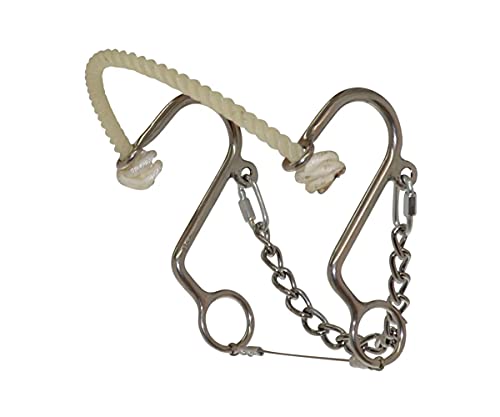
- Diamond R version of the popular Little S with a rope nose for natural rate control.
- Offers lift and flex, commonly used by competitors in slow-work settings.
- Widely trusted by barrel racers and trainers for dependable performance in practice and competition.
This Diamond R Little S Rope Nose Hackamore provides a refined balance of lift and cue sensitivity, making it a capable choice for horses that respond well to light signals and need a bit that yields good lateral communication without excessive restraint. It is favored for slow work and training scenarios where timing matters.
id=”reinsman-951-mechanical-hackamore”>Reinsman 951 Mechanical Hackamore

- Flat leather nose designed to key a horse with natural rate.
- Stage C for neck reining; features solid mouthpieces and swivel cheeks.
- Adaptable for riders new to mechanical hackamores or seeking a trusted training tool.
The 951 Mechanical Hackamore is a proven option for neck-reining horses that prefer a more direct poll cue and steady support. Its flat leather nose helps horses feel a consistent point of contact, making it suitable for riders advancing from basic training to more controlled neck reining while maintaining comfort and control.
id=”buying-guide”>Buying Guide
Key purchase considerations for hackamores include horse temperament, riding discipline, and experience level. Material quality, cheek length, and nose design impact signaling and comfort. Consider the following perspectives to guide your choice.
- Horse temperament and rate: For highly reactive horses, opt for a lighter signal with a rope or leather nose that communicates clearly without harsh cues. Horses with natural rate often respond well to rope-nose or flat-nose designs.
- Training goals: If you’re working toward neck reining or stage C control, prioritize hackamores labeled for neck reining compatibility and those that offer predictable poll pressure without excessive mouth contact.
- Durability and maintenance: Stainless steel and chrome-plated hardware endure frequent use and weather exposure. Check for solid construction, reinforced cheeks, and rust resistance for longevity.
- Fit and sizing: Cheek length and noseband style affect leverage and cue effectiveness. Taller or larger horses may benefit from longer cheeks, while smaller horses respond better to compact designs.
- Rider experience: Beginners should start with simple rope-nose or flat-nose designs to develop feel before advancing to more complex mechanisms like mechanical hackamores, which require precise timing and lighter hands.
- Discipline alignment: Barrel racing, western pleasure, and cattle work often benefit from rope-nose and lift-rich designs, while neck-reining practice may favor straight, flat-nose variants with reliable signaling.
In evaluating options, compare the intended use, horse response, and maintenance needs. A well-matched hackamore supports consistent signals, rider confidence, and a smoother training progression, reducing resistance and promoting cooperative behavior during slow work, training sessions, or competition weekends.