
Finding the right hay bin for rabbits helps reduce mess, encourage natural nibbling, and keep habitats tidy. This guide highlights five practical hay feeders that suit rabbits, guinea pigs, chinchillas, and other small animals. Each option focuses on durability, ease of installation, and waste reduction. Best for owners who want spill-free feeding, simple maintenance, and sturdy metal designs alternatives to soft fabric holders. The following selections balance capacity, reliability, and ease of use for different cage setups and animal personalities.
The table below summarizes the five featured hay bins, highlighting who each is best for and why it stands out.
| Product | Best For | Why It Stands Out |
|---|---|---|
| X Large Rabbit Hay Feeder (Harhana Store) | Rabbits needing extra hay capacity | Large size, sealed bottom, reduces spills; sturdy metal with noise reduction features |
| Guinea Pig Hay Feeder (Heavy-Duty Metal Frame) | Small animals in tight cages | Durable metal, easy hook installation, compact 6.9″ x 4.7″ x 6.6″ |
| Hay Feeder with Basket (Black) | Budget-friendly, simple setup | Wields a bottom grid to cut waste; lightweight and easy to clean |
| Upgrades Rabbit Hay Feeder (Adjustable Hook) | Active or nibbling pets in larger cages | Less wasted hay, sturdy metal frame, adjustable hook for secure mounting |
| 2Pcs Rabbit Hay Feeder Bags (Oxford) | Traveling or space-constrained setups | Two-hole design slows eating; portable, wall-mountable, and leakproof |
X Large Rabbit Hay Feeder With Metal Frame

This extra-large feeder is designed for rabbits that consume higher hay volumes. Its 9.7 x 4.7 x 6.6-inch footprint offers increased capacity, reducing refill frequency. The sealed bottom helps contain hay and minimize mess, making it ideal for busy owners or multi-pet households. The metal frame supports chew durability, while a folding design aids storage when not in use. Two buckles and six straps help secure the feeder in a cage, keeping it stable during active nibbling. Best for rabbits that tend to scatter hay and for cages with ample space. A potential limitation is that very small habitats may require careful placement to avoid obstruction.
Best for: Rabbits with higher hay intake and cages where spill containment is a priority. Choose this if you want a larger capacity and a tidy feeding setup.
Guinea Pig Hay Feeder With Heavy-Duty Metal Frame
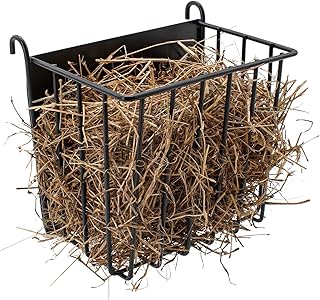
This feeder is built around a robust metal frame and measures 6.9 x 4.7 x 6.6 inches, making it suitable for small animals like rabbits and guinea pigs. It features an easy hook design for straightforward installation in most cages. The heavy-duty construction promises durability against chewing and daily use. Best for pet households prioritizing a compact, durable solution that fits smaller cages without compromising hay access. A note: the product page omits details on anti-spill mechanisms beyond the sealed bottom in some models, so assess spill needs on arrival.
Hay Feeder For Rabbit: Heavy-Duty Metal Frame

This metal-frame hay feeder is designed to minimize mess and waste. A bottom grid reduces hay falling into waste and manure, and the unit is easy to wipe clean. Weighing is lightweight at about 0.26 pounds, with a black matte coating for durability. It’s simple to hang inside or outside a cage using hooks or to place vertically in the enclosure. Best for owners seeking a lightweight, easy-to-clean option with basic waste-control features. Limitation: minimal details on exact mounting options beyond hooks and vertical placement.
Upgrades Rabbit Hay Feeder With Adjustable Hook

This upgrade model emphasizes reduced waste through its design that keeps hay from spilling and soiling. The sturdy metal frame resists chewing, and the adjustable hook helps secure mounting to fit different cage configurations. It’s positioned as a strong option for guinea pigs, chinchillas, and rabbits that tend to knock over feeders. Best for cage versatility and stable placement. A caution: ensure the adjustable hook is tightened well to prevent wobble in larger cages.
2Pcs Rabbit Hay Feeder Bags (Oxford)

These Oxford hay bags come as a two-pack, each with two feeding holes designed to slow eating and aid digestion. The breathable Oxford fabric keeps hay dry and clean, and the Velcro closure simplifies filling while preventing curious pets from accessing the bag interior. Wall-mount capability and two metal hooks offer flexible placement options. Best for travelers or households needing compact, portable feeding solutions. A limitation is that fabric bags may still be chewed by highly determined chewers and could require periodic replacement.
Buying Guide: How To Pick The Right Hay Bin
- Size and capacity: Match feeder size to your rabbit’s hay intake and cage space. Larger breeds or busy eaters benefit from bigger bins, while smaller cages benefit from compact designs that minimize spillage.
- Mess minimization: Look for sealed bottoms, bottom grids, or two-hole designs that keep hay clean and reduce soiling from waste. Consider whether you prefer a trap-free feeding experience or a simple, wipe-clean surface.
- Mounting and stability: Decide between hook-based, cage-bar mounting, or freestanding options. Stability is crucial to prevent tipping, especially for active rabbits.
- Material and durability: Metal frames tend to be sturdier and chew-resistant compared to soft fabrics. Check for rust-resistant finishes and rounded edges to prevent injuries.
- Maintenance: Easy-clean feeders save time. If you’re short on time, choose designs that wipe clean or machine-washable bags.
- Animal-specific considerations: Some animals are more prone to chewing or escaping holes. Look for narrow gaps and small openings that prevent head or limb entrapment.
Frequently Asked Questions
- What size hay feeder is best for a dwarf rabbit? Choose a compact feeder with a small opening and a bottom that minimizes hay scattering. Ensure it fits comfortably inside your cage without obstructing movement.
- Are metal hay feeders safer than plastic? Metal feeders are typically more durable and chew-resistant, reducing the risk of accidental breakage. Plastic feeders may crack in some cages and after chewing.
- How can I reduce hay waste? Look for designs with bottom grids, sealed bottoms, or two-hole feeding to slow consumption and prevent hay from falling out or getting soiled.
- Can I use hay bags for rabbits? Yes, hay bags can be practical for space-saving setups or travel. Ensure the bag is breathable and securely mounted to avoid tearing.
- How often should I refill a hay feeder? It depends on the animal’s appetite and hay quality. Large-capacity feeders may require refilling every few days for high-hay diets; smaller cages may need daily attention.
- Is installation complicated? Most feeders use simple hooks or cage-bar mounting. Follow the manufacturer’s instructions to ensure secure placement and minimize disturbance to the animals.