
Maintaining stable water temperature is critical for the health of larger freshwater or saltwater tanks. The following five heaters are well-suited for 60-gallon systems, offering accurate temperature control, safety features, and durable construction. Each option supports 40–60+ gallon tanks and comes with a digital or external controller to minimize temperature fluctuations.
| Product | Recommended Tank Range | Wattage | Special Features |
|---|---|---|---|
| Orlushy 300W Submersible Aquarium Heater | 40-60 gallons | 300W | Digital display, external controller, auto shut-off at 95°F |
| Orlushy Submersible Aquarium Heater 300W | 40-55 gallons | 300W | 2 suction cups, free thermometer, quartz glass |
| Orlushy 500W Submersible Aquarium Heater | 55-80 gallons | 500W | External controller, quartz glass, auto shut-off at high temp |
| AQUANEAT 300W Aquarium Heater | 40-75 gallons | 300W | Integrated digital thermometer, adjustable thermostat |
| MantaMaze 300W/500W/800W Heater | 20-300 gallons | 300/500/800W | External digital controller, overheating protection, submersible |
Orlushy 300W Submersible Heater For 40-60 Gallons

The Orlushy 300W Submersible Aquarium Heater is engineered to maintain stable temperatures in mid-to-large tanks. It is suitable for 40–60 gallon setups, including freshwater and many saltwater applications. The heater’s compact 8.6-inch body reduces intrusiveness and helps it blend into the aquarium scenery. A quartz glass construction provides enhanced durability and heat resistance, helping it stand up to long-term use in varied water conditions. It features a premium nickel-chromium heating element for rapid warming and an accurate real-time water temperature sensor. A safety feature automatically cuts power when the water approaches 95°F, with an error code indicating the situation, lowering the risk of overheating for your aquatic life.
Key features include a digital display, external controller compatibility, and overheat protection. The combination of fast heating, precise temperature regulation, and a robust build makes this model a strong candidate for 60-gallon tanks, particularly in homes with fluctuating ambient temperatures. Users should ensure the thermostat is calibrated to the intended setpoint to avoid unnecessary energy use and to prevent sudden thermal shifts in the tank.
Orlushy 300W Submersible Heater – 40-55 Gallons
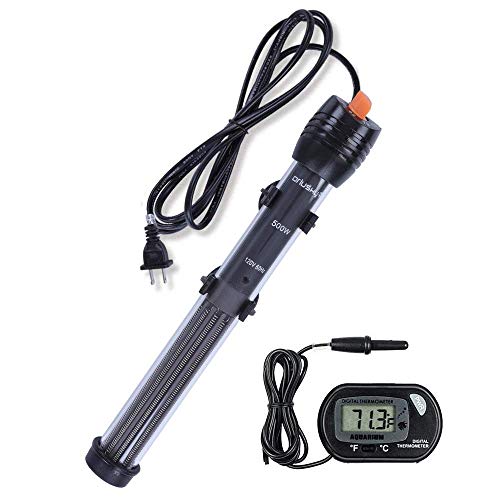
This 300W model is designed for 40–55 gallon tanks, offering a balance of compact size and effective heating. The heater uses 2mm thickened quartz glass for added safety and durability in both freshwater and saltwater environments. It includes visible temperature adjustment controls and is easy to hide within decor or substrate. The external appeal is its straightforward operation while maintaining reliable performance in mid-sized aquariums, making it a practical choice for 60-gallon systems that need slightly lower wattage options without sacrificing consistency.
In practice, this heater supports gradual temperature changes and can be paired with a separate thermometer for redundancy. It is important to match wattage to the actual water volume and heat load, particularly in rooms with wide temperature swings or in tanks housing multiple sensitive species.
Orlushy 500W Submersible Heater For 55-80 Gallons
The 500W Orlushy heater is sized for larger tanks, including those within the 55–80 gallon range. It shares the same durable quartz glass construction and an external controller for precise temperature management. The 9.8-inch form factor keeps the heater compact for larger installations, helping it remain unobtrusive as it hides behind décor or within the substrate. The unit features rapid heating, a robust safety system, and the ability to monitor temperature in real time. This makes it a strong option for 60-gallon setups that require a little extra heat capacity during colder seasons or in cooler rooms.
Users should ensure proper submersion and follow manufacturer guidance for placement to maximize heat distribution. Regular checks of the external controller and sensor accuracy will help maintain a stable environment for fish, plants, and invertebrates in a 60-gallon tank.
AQUANEAT 300W Aquarium Heater For 40-75 Gallons

The AQUANEAT 300W heater is well-suited for 40–75 gallon tanks, offering a straightforward temperature dial, a built-in digital thermometer, and automatic shutoff indicators when the target temperature is reached. Its 11.5-inch length helps it stay discreet while still delivering consistent warmth across a large tank. The temperature range 65°F–89°F accommodates a wide spectrum of freshwater and some marine configurations, and the device is designed to operate reliably under typical home ambient conditions. The external controller is user-friendly and helps harmonize tank temperature with minimal effort, a valuable feature for busy aquarists maintaining a 60-gallon system.
Best practices for use include securing the heater with the included silicone suction cups and placing it away from direct flow sources to avoid localized hotspots. For saltwater tanks, ensure compatibility with the tank’s salinity and skimmer load, as these factors can influence heat distribution over time.
MantaMaze 300W/500W/800W Submersible Heater For 20-300 Gal

The MantaMaze heater line provides multiple wattage options in a single product family, covering 20–300 gallons with 300W, 500W, and 800W variants. It features an external digital controller that displays current and target temperatures, along with alerts for high temperature or when the heater is out of the water. Safety features include automatic shutoff when the water reaches the set temperature or the heater is exposed above the water surface. A rugged shell and explosion-proof quartz glass help protect both the equipment and the inhabitants of the tank. For 60-gallon systems, selecting the 300W or 500W version can offer ample headroom for maintaining stable temperatures across seasonal changes.
When selecting this option, match wattage to the tank’s heat load and consider room temperature and lighting schedules, which can influence thermal performance. Regular verification of temperature readings with a separate thermometer is recommended to ensure precision.
Buying Guide: Key Purchase Considerations for 60-Gallon Tanks
- Wattage and heat load: A 60-gallon tank typically benefits from heaters in the 300–500W range, depending on room temperature, livestock, and aquascape. Avoid underpowered units that struggle to reach and sustain target temperatures in cooler environments.
- Temperature control: Look for external controllers or digital displays for precise adjustments. A separate thermometer is advisable for redundancy and accuracy.
- Safety features: Overheat protection, automatic shut-off near the set temperature, and high-quality quartz glass construction improve reliability and reduce risk to inhabitants.
- Durability and material: Quartz glass heaters are preferred for durability and resistance to heat shock. A robust housing minimizes damage from accidental bumps and moisture exposure.
- Size and placement: Taller heaters with compact profiles are easier to hide behind decor or in the substrate. Ensure submersion depth and proximity to filtration to promote uniform heat distribution.
- Compatibility: Confirm the heater’s suitability for freshwater or saltwater, and verify that the product supports your tank’s volume within a safe margin.
- Redundancy options: For critical setups, pairing two smaller heaters with independent thermostats can provide safer, more uniform heating than a single large unit.
Notes on Safety and Maintenance
- Inspect heaters regularly for cracks or signs of wear in the quartz glass and cords. Replace any unit showing damage to prevent leakage or electrical faults.
- Calibrate set temperatures with a reliable aquarium thermometer. Temperature swings can stress fish and corals and should be minimized.
- Avoid placing heaters directly against tank glass in direct current flow areas; aim for even heat distribution to prevent hotspots.
- When power is interrupted, test temperature regulation after restoration to ensure the controller resumes accurate readings.