
The following guide highlights popular newborn puppy milk formulas designed to support early growth when a mother’s milk isn’t available. Each product is selected for its close nutritional profile to canine milk, ease of digestion, and practical storage or on-the-go feeding options. Use this overview to compare formulas by form, ingredient focus, and digestion benefits for newborns and young puppies.
Summary of chosen products
| Product | Form | Key Benefit | Approximate Size |
|---|---|---|---|
| PetAg Esbilac Puppy Milk Replacer Liquid – 11 oz | Ready-to-Feed Liquid | Close to mother’s milk; easy digestion | 11 oz |
| Hartz Powdered Puppy Milk Replacer – 12 oz | Powder | Quick mix; calcium and vitamins for growth | 12 oz |
| Pet-Ag Goat’s Milk Esbilac Liquid – 11 oz | Ready-to-Feed Liquid | Goat milk formula for sensitive digestibility | 11 oz |
| Pet-Ag Esbilac Puppy Milk Replacer Powder – 12 oz | Powder | Prebiotics, probiotics, and balanced nutrition | 12 oz |
| Pet-Ag PetLac Powder for Puppies – 10.5 oz | Powder | Complete nutrition with easy digestion | 10.5 oz |
This overview focuses on products widely recognized for supporting newborn and young puppies, including several Esbilac formulas and goat-milk options. Each item provides essential proteins, fats, vitamins, and digestive support to help puppies grow healthy and strong when nursing isn’t possible.
PetAg Esbilac Puppy Milk Replacer Liquid – 11 oz

Puppy milk replacement designed as a close substitute to mother’s milk, this liquid formula covers the nutritional needs of puppies from birth to six weeks old. It emphasizes complete and balanced nutrition with higher protein, fat, and carbohydrate levels similar to canine milk. The formula is crafted for easy digestion, aided by a fiber blend to support gut health. It is suitable for situations where the dam cannot nurse or when supplemental feeding is required.
Hartz Powdered Puppy Milk Replacer – 12oz
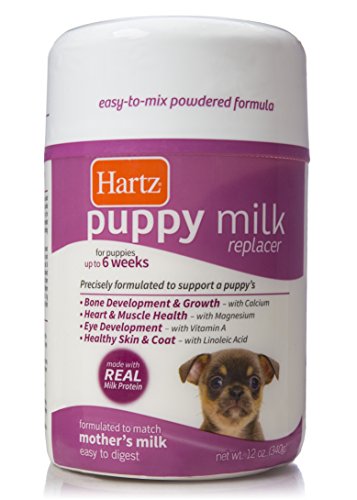
This precisely formulated powder mirrors a mother dog’s milk, enabling quick preparation with room-temperature water for on-demand feeding. It supports bone development through calcium, heart and muscle health via magnesium, and eye development with Vitamin A. The presence of linoleic acid also helps maintain healthy skin and coat. The powder form makes storage and portioning straightforward for breeders or caregivers.
Pet-Ag Esbilac Puppy Milk Replacer Liquid – 16 oz

This larger resealable liquid formula serves newborn puppies through one year, offering convenient storage and portability. It provides the same core nutrition as Esbilac variants—balanced protein, fats, vitamins, and minerals—plus a digestible fiber blend to support gut health and tolerance. It is designed as a ready-to-feed option that reduces prep time during critical early weeks.
Pet-Ag Goat’s Milk Esbilac Liquid – 11 oz

The Goat’s Milk Esbilac is formulated for puppies with sensitive digestive systems, using whole goat milk protein to closely mirror natural milk composition. It aims to deliver complete nutrition for newborns to six weeks old, with a strong emphasis on digestibility. The formula is highly palatable and includes a fiber blend to promote gut health and easy digestion, making it a suitable alternative for puppies that struggle with cow’s milk formulations.
Pet-Ag Esbilac Puppy Milk Replacer Powder – 12 oz

The Esbilac powder version adds prebiotics and probiotics to support immunity and digestive health, alongside a balanced profile of protein, fat, and carbohydrates. The powder form is practical for caregivers who prefer mixing fresh servings as needed or managing multiple feedings during the critical early weeks. It is designed to be easily digested with a fiber blend that promotes gut health in newborns and young puppies.
Pet-Ag PetLac Powder for Puppies – 10.5 oz
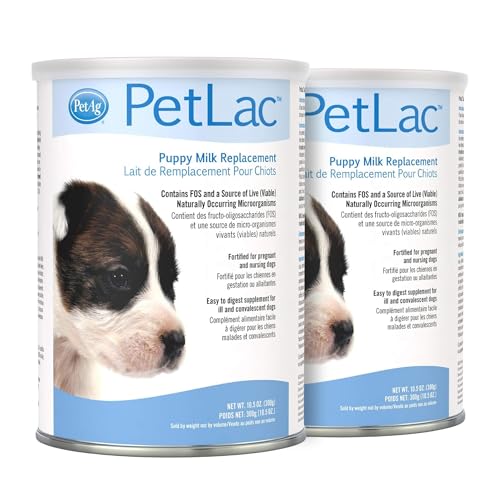
PetLac powder provides complete nutrition tailored for orphaned, nursing, or weaning puppies, with additional support for thin or older dogs. It emphasizes easy digestion and includes the amino acids and minerals necessary for healthy growth. The two-pack option (or larger supply) can be cost-efficient for households with multiple newborns or frequent feedings.
Buying Guide: Key Purchase Considerations
- Form and convenience: Liquid formulas are ready-to-use and quick for urgent feedings, while powders require mixing but can be stored longer and allow portion control. Consider your daily feeding schedule and freezer or refrigerator access.
- Digestive compatibility: Look for formulas with fiber blends for gut health, and consider options with prebiotics and probiotics if the puppy has shown digestion sensitivity.
- Protein source: Cow-milk–based substitutes are common, but goat-milk formulas can be gentler on sensitive stomachs. Choose based on the puppy’s tolerance and any known allergies.
- Age range and growth coverage: Ensure the formula covers the intended age range (newborn to six weeks, or to one year in some products) and supports steady growth with balanced protein, fat, and carbohydrates.
- Nutrition completeness: Verify the inclusion of essential vitamins, minerals, and trace nutrients that align with canine developmental needs during early life stages.
- Storage and shelf life: Liquid formulas typically require refrigeration after opening, while powders may have longer shelf lives if kept dry. Consider your storage space and travel needs.
- Immune support: Some products include colostrum, prebiotics/probiotics, or fortified ingredients to bolster immune function and digestive health—useful for fragile or orphaned puppies.
- Cost and availability: Compare prices per ounce and ease of procurement, especially for households caring for multiple puppies or frequent feeders.
- Veterinary guidance: For puppies with known health issues or digestive sensitivities, consult a veterinarian to select the most suitable formula and feeding plan.
Across these options, caregivers can choose between ready-to-feed formulas for speed and convenience, or powder forms for flexible batching and storage. Goat-milk variants may offer better tolerance for sensitive stomachs, while formulas with added prebiotics, probiotics, or colostrum can provide extra immune support during the critical early weeks.