
Maintaining proper oxygenation in a fish tank is essential for the health of your aquatic pets. A reliable aquarium air pump provides steady oxygenation, reduces stress, and supports beneficial gas exchange. This guide reviews top-rated, low-noise pumps designed for 10–100 gallon setups, helping you choose the best oxygen solution for your tank without disturbing the ambiance of your space.
Summary of selected products:
| Product | Brand | Tank Range | Air Flow | Notable Features |
|---|---|---|---|---|
| HITOP Dual Outlet Aquarium Air Pump | HITOP | 20–100 gallons | 3W power, dual outlets | Ultra quiet, adjustable via dial, ABS construction |
| AQQA Aquarium Air Pump (3.5W) | AQQA | Up to 160 gallons | Two outlets, up to 100 GPH | Low noise, durable stainless steel dual outlets |
| Pawfly Aquarium Air Pump 50 GPH | Pawfly | 10–60 gallons | 50 GPH | Quiet operation, adjustable air flow |
| Uniclife 64 GPH Aquarium Air Pump | Uniclife | 10–100 gallons | 64 GPH | Low noise, dual outlets, adjustable flow |
| DaToo Aquarium Air Pump (3W, 40 GPH) | DaToo | 1–20 gallons | 40 GPH | Whisper-quiet, small body, durable |
HITOP Dual Outlet Aquarium Air Pump

The HITOP air pump features two outlets and a manually adjustable air volume, enabling precise control for tanks from 20 to 100 gallons. Constructed from ABS thickening engineering plastics, it emphasizes quiet operation with soft rubber feet to reduce vibrations. The unit boasts a longer service life due to its robust design and is safer than electronic adjustments. Its 3W rating makes it appropriate for mid-sized aquariums while delivering dependable oxygenation.
AQQA Aquarium Air Pump with Dual Outlet

Designed for power and efficiency, the AQQA model offers a dual-outlet setup with a powerful 3W/6W/10W range, suitable for up to 200 gallons depending on configuration. It emphasizes energy conservation with a stable output and low noise—typically under 35dB—thanks to a double-layer housing and soft rubber pads. This pump supports a wide range of air stones and can handle larger tanks, making it a versatile choice for serious aquarists seeking robust oxygenation.
Pawfly Aquarium Air Pump 50 GPH

This Pawfly model delivers a steady 50 GPH air flow with adjustable output, suitable for tanks up to 60 gallons. It emphasizes quiet operation—under 30 dB—thanks to four soft feet that minimize vibration. The compact design and simple flow adjustment make it a practical option for small to medium tanks needing reliable oxygenation without noise disruption.
Uniclife 64 GPH Dual Outlet Pump
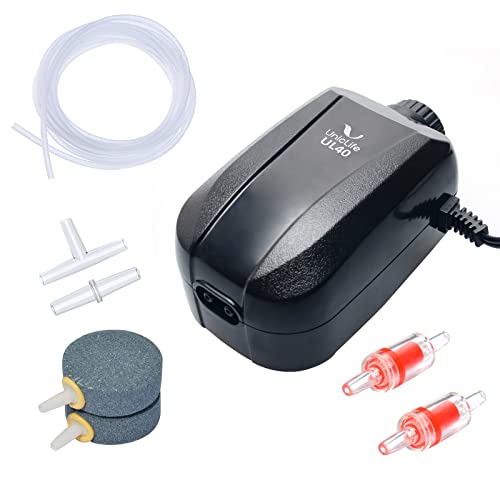
The Uniclife pump provides a 64 GPH maximum output across a 10–100 gallon range with dual adjustable outlets. It features a quiet operation profile—25 dB on the low setting and up to 45 dB at higher flow—and includes a rotary control to tailor airflow. The unit’s 4 W rating signals solid power for consistent oxygenation and compatibility with various air stones and tubing configurations.
AQQA Aquarium Air Pump (3.5W) Dual Outlet
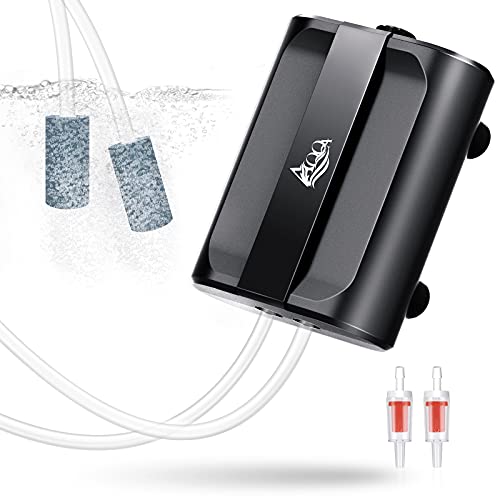
This compact AQQA model is a 3.5W dual-outlet pump designed for small to medium tanks up to 160 gallons. It includes two air stones and connectors, offering flexible setup options for optimized oxygenation. The pump emphasizes durability with a robust ABS body and provides a balance between power and quiet operation, making it suitable for apartments or bedrooms where ambiance matters.
DaToo Aquarium Air Pump Compact

The DaToo 3W 40 GPH pump is a compact, whisper-quiet solution designed for tanks from 1 to 20 gallons. Its small footprint makes it easy to hide in cabinetry or behind décor while delivering sufficient oxygenation. The package emphasizes a silent operation and durable construction, suitable for hobbyists with limited space or quiet environments.
Buying Guide: Key Purchase Considerations
There are several factors to consider when choosing an aquarium air pump for optimal oxygenation. Review these perspectives to ensure you select a model that matches tank size, bioload, and noise tolerance.
- Tank size and number of outlets: Larger tanks often benefit from dual outlets to distribute air evenly. Matching the pump’s flow rate to tank volume helps prevent over- or under-aeration.
- Airflow and adjustable controls: Pumps with adjustable flow let you tailor oxygen delivery as biological filtration and stocking levels change. Rotary knobs are common and intuitive.
- Noise and vibration: Quiet pumps with rubber feet, dampened housings, and soft mounting reduce disruption in living spaces, bedrooms, or offices.
- Durability and materials: ABS plastics and stainless steel components offer longer service life and better resistance to humidity and salt exposure in marine setups.
- Power efficiency: Lower wattage pumps that still meet your flow needs save energy and generate less heat, beneficial for smaller or enclosed tanks.
- Maintenance and replacement parts: Consider access to replacement diaphragms, seals, and tubing. Dual-outlet designs may require more tubing and connectors.
- Noise benchmarks: Real-world noise levels often depend on mounting method, tank cover use, and ambient room noise. Look for claims around decibel ranges and verify with user reviews when possible.
- Water type compatibility: If you maintain both freshwater and marine setups, ensure the pump materials resist corrosion and that the device supports different air stone configurations.
Across the reviewed models, choices vary from compact, low-wattage units ideal for small tanks to more robust dual-outlet pumps suitable for mid-to-large volumes. For apartments or quiet spaces, prioritizing noise reduction features and soft mounting can significantly improve liveability. For larger systems, dual outlets with adjustable flow provide better oxygen distribution and customization. Always verify compatibility with your tank’s size and filtration arrangements to maximize oxygenation without creating excess turbulence.