
As winter approaches, keeping a safe, breathable hole in the ice is essential for fish health and gas exchange. The following pond heaters are designed to run safely in outdoor ponds, providing reliable ice-free zones and protecting aquatic life. Each option below offers smart thermostatic control, durable construction, and user-friendly features to suit different pond sizes and climates.
Summary of Selected Products
| Product | Brand | Key Feature | Ideal For |
|---|---|---|---|
| Laguna PowerHeat 315-Watt Floating Pond Heater | Laguna | LED indicator, integrated thermostat | Small to medium ponds |
| Farm Innovators 1250W Cast Aluminum Floating Heater | Farm Innovators | Cast aluminum, built-in thermostat | Cold climates, larger ponds |
| tenlox 1000W Pond Heater | tenlox | Thermostatic control, energy saving | Medium to large ponds, varied plastics |
| TURBRO Pond De-icer 400W | TURBRO | Extended cord, SCR tech, safety plug | Outdoor ponds needing flexibility |
| HITOP 600W Outdoor Pond Heater | HITOP | Fast heating, floatable design | Small to medium ponds |
Laguna PowerHeat 315-Watt Floating Pond Heater

The Laguna PowerHeat 315-Watt De-Icer is designed to keep a small hole in the ice to support gas exchange and protect aquatic life during freezing temperatures. It floats on the pond surface and includes a clearly visible LED indicator so users can confirm the unit is operating. The integrated thermostat automatically shuts off the heater when temperatures rise enough, reducing energy use and preventing overheating. This model is suited for plastic and liner ponds, and its 22-foot cord provides flexible placement options for varied pond layouts. The combination of floating design, thermostat control, and a durable build makes it a practical choice for smaller to medium-sized outdoor ponds.
Key considerations for this option include its wattage effectiveness in very cold snaps, the visibility of the LED indicator for quick status checks, and the compatibility with pond linings. It works best when a dedicated, stable power source is available and when pond dimensions fall within its heating footprint. Users should monitor ice thickness and ensure the heater remains properly positioned to avoid accidental contact with pond liners or debris.
Farm Innovators 1250W Cast Aluminum Floating Heater

The Farm Innovators 1250-Watt floating pond heater uses a rugged cast aluminum body for efficiency and safety in harsh winter conditions. Its built-in thermostat keeps energy use reasonable by turning off the heater when the water is warm enough, and on when temperatures drop sufficiently to prevent a complete ice-over. The device is designed to float on the pond’s surface and creates a safe breathing zone for fish by allowing gas exchange through the ice. The included 10-foot cord aids in placement flexibility, and the robust construction helps it withstand winter weather in outdoor ponds typically larger than those suited for low-wattage devices.
Considerations include ensuring adequate electrical safety and protection against moisture ingress. The unit’s size and heat output make it better suited for medium to large ponds or colder climates, where maintaining a small breathing hole can significantly improve winter fish welfare. Placement away from pond edges and debris is advised to maximize efficiency and avoid entanglement with aquatic vegetation.
tenlox 1000W Pond Heater
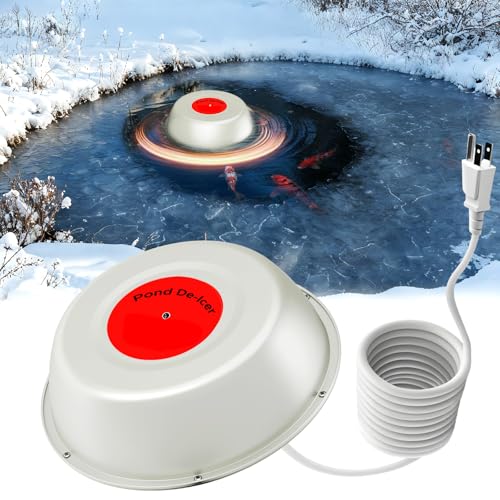
The tenlox 1000W pond heater features smart thermostatic control that automatically activates below 41°F and shuts off above 131°F, balancing energy use with reliable ice management. Its floating design creates a small ice-free zone around the heater to support gas exchange while avoiding heating the entire pond. The unit is described as suitable for 50-500 gallon ponds with plastic, rubber, or liner configurations, and it includes a durable construction with a 10-foot cord for flexible placement. This model is well suited for smaller to mid-sized outdoor ponds in cold climates where efficient ice control is essential without excessive heat input.
Important considerations include the heater’s target pond volume, its ability to withstand outdoor weather, and how effectively it maintains a safe breathing hole without overheating surrounding areas. Placement should minimize contact with pond liners and avoid submerging anything that could impede the unit’s circulation or thermostat performance.
TURBRO Pond De-icer 400W

The TURBRO 400W pond de-icer features a full stainless steel casing and UL-listed cord with GFCI leakage protection for enhanced electrical safety in outdoor environments. With IP68 water resistance and overheating protection, this unit prioritizes reliable operation in harsh winter conditions. The device uses SCR technology for fast, precise temperature management, delivering quicker responses and a longer lifespan compared to traditional mechanical de-icers. Its lengthened 32.8-foot power cord increases placement flexibility, enabling users to avoid obstacles and reach sockets farther from the pond. This model is suitable for a range of outdoor ponds that require dependable ice management and safety features.
When selecting a TURBRO model, consider the pond size, climate severity, and electrical safety measures. The extended cord is beneficial for larger setups or when electrical outlets are distant from the pond. Ensure the device is not installed in a position where it could become buried under debris or ice, which could affect efficiency or safety.
HITOP 300W Outdoor Pond Heater

The HITOP 300W pond heater is designed to heat surrounding water and maintain an ice-free area around the outlet to provide gas exchange for fish. The unit uses a floatable foam design for buoyancy and keeps the heater bottom away from pond mud. With a temperature control range around 68-72°F in many setups, the heater can automatically start or stop based on the water temperature, offering straightforward operation with minimal manual intervention. This model is noted as a practical option for small to mid-sized outdoor ponds where a compact heater is preferred and where avoiding plastic ponds is recommended.
Key considerations include pond volume compatibility, weather impact on heating efficiency, and ensuring the heater remains floating and properly oriented. Avoiding contact with pond liners or debris will help maintain consistent performance and extend the device’s life in winter conditions.
Buying Guide: Key Purchase Considerations For Pond Heaters
- Pond size and volume: Choose wattage that matches your pond’s water volume. Larger ponds typically require higher-wattage heaters to maintain an open hole for gas exchange.
- Thermostatic control: Look for built-in thermostats that turn the heater on below a target temperature and off above it to balance energy use with effective ice management.
- Durability and materials: Cast aluminum, stainless steel, or robust plastic housings improve longevity in cold, wet environments. Ensure the unit is rated for outdoor, submersible, or floating use as appropriate.
- Safety features: GFCI-protected plugs, IP ratings, and overheating protection reduce risk in wet conditions. A float design helps keep the heater in position and reduces the chance of mud contact.
- Installation flexibility: Consider cord length and placement options. Longer cords enable greater flexibility but ensure the cord’s insulation and strain relief are suitable for outdoor use.
- Compatibility with pond type: Some models are not suitable for plastic ponds or liners. Check manufacturer guidance and avoid units that could damage liners or degrade with submersion.
- Energy efficiency: Thermostatic models provide energy savings by heating only when necessary. Compare energy use across models to minimize costs during extended cold snaps.
- Maintenance: Choose units with simple access for cleaning and inspection, particularly for debris-prone ponds. Periodic checks help maintain safety features and thermostat accuracy.
When selecting among these options, balance pond size, climate severity, electrical safety, and maintenance requirements. For small, decorative, or liner ponds in milder climates, lower-wattage floating heaters with reliable thermostats are often adequate. For larger or harsher environments, higher-wattage cast aluminum or SCR-based de-icers provide more robust protection and longer service life. Always follow manufacturer installation instructions and consult a licensed electrician for outdoor wiring and GFCI compliance.