
Starting a saltwater tank can be smooth and affordable when you pick the right starter kit components. This guide highlights five essential products that pair well to create a healthy, manageable 15–20 gallon setup for beginners and hobbyists diversifying to reef habitats. Each item is chosen for ease of use, reliability, and clear benefits for new saltwater aquarists. Read on to see who each product suits best and where to use them in your tank setup.
| Product | Why It’s Included |
|---|---|
| HelloReef 15 Gallon Beginner Clownfish Saltwater Aquarium Kit | Complete beginner-friendly kit with guidance and all-in-one setup for a visually engaging, small reef-ready system. |
| Brightwell Aquatics MicroBacter Start XLM | Concentrated nitrifying bacteria to jump-start biological filtration and stabilize water quickly. |
| API QUICK START Freshwater and Saltwater Nitrifying Bacteria 16-Ounce | Rapid cycle starter to establish beneficial bacteria to support new livestock after setup. |
| API SALTWATER MASTER TEST KIT | Comprehensive test kit to monitor ammonia, nitrite, nitrate, and pH for a healthy saltwater environment. |
| Aqueon Aquarium Starter Kit with Smart Clean Filtration | All-in-one kit with a reliable filtration system and beginner-friendly maintenance workflow. |
HelloReef 15 Gallon Beginner Clownfish Saltwater Kit

Best for: New reef hobbyists seeking an all-in-one package with guidance and community support. This kit includes the tank, filtration, lighting, decor, and a setup guide, making it easier to start with a visually appealing setup. The integrated app-controlled lighting and comprehensive support materials help beginners follow a proven process, reducing guesswork. A potential limitation is the reliance on HelloReef’s ecosystem, which may require adherence to their recommended consumables and setup approach.
Brightwell Aquatics MicroBacter Start XLM

Best for: Saltwater tanks with higher stocking or higher bioload where rapid nitrifying bacteria introduction helps stabilize ammonia and nitrite levels. This product is focused on speeding up the establishment of a robust microbial community. Limitation: Its high concentration is designed for rapid results, so follow recommended dosing to avoid unintended shifts in water chemistry in very small systems.
API QUICK START Freshwater and Saltwater Nitrifying Bacteria 16-Ounce Bottle

Best for: Quick-start cycles in new saltwater tanks to establish beneficial bacteria alongside routine-use maintenance. This large bottle serves as a reliable starter and ongoing maintenance aid. Caution: Always introduce bacteria as part of a balanced cycling plan; avoid relying on bacteria alone to manage ammonia spikes without proper filtration and water testing.
API SALTWATER MASTER TEST KIT 550-Test
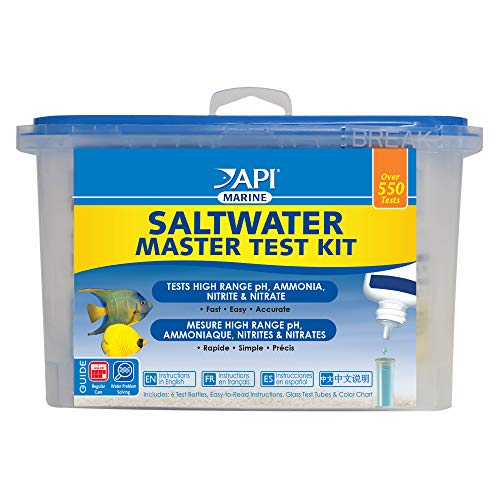
Best for: Regular, accurate monitoring of the four critical water parameters (pH, ammonia, nitrite, nitrate) to prevent invisible water issues. Particularly useful for new saltwater tanks to catch problems early. Limitation: It requires careful handling of reagents and consistent testing to interpret results correctly; misreading can lead to incorrect adjustments.
Aqueon Aquarium Starter Kit with Smart Clean Filtration

Best for: Beginners wanting a ready-to-go freshwater or saltwater kit with a dependable filtration system and built-in lighting. This kit simplifies setup and ongoing maintenance with a SmartClean filter and included essentials. Caution: It’s marketed as a starter kit, so future upgrades are common as you scale up or explore coral-reef options.
Buying Guide
What size tank should you start with? For saltwater beginners, a 15–20 gallon system often provides a balance between manageable maintenance and visible results. Look for starter kits that include filtration, lighting, and a setup guide to minimize guesswork.
What should you test and why? Regular testing of ammonia, nitrite, nitrate, and pH helps prevent hazardous conditions that can stress fish and corals. A master test kit combines the key parameters in one tool, while individual bottles or starter bacteria help seed healthy microbial life.
How important is bacterial seeding? Nitrifying bacteria convert toxic ammonia to nitrite and then nitrate. Starter bottles and concentrated cultures accelerate this process, reducing cycle time and helping livestock adapt faster when introduced.
What are the trade-offs with all-in-one kits? All-in-one kits simplify initial setup and reduce decision fatigue. However, they may limit upgrade paths or reef-specific options. Assess whether you plan to keep a clownfish, beginner anemone, or simple coral decorations to choose the right balance of equipment.
Maintenance considerations: Set up a routine that includes regular water changes, equipment checks, and test scheduling. A kit with durable filtration and accessible replacement parts reduces long-term maintenance challenges.
FAQ
- What is the easiest way to start a saltwater tank?
Use a comprehensive starter kit with guidance, a reliable filter, and a basic test plan to monitor key parameters. - How often should I test water in a new tank?
Check ammonia, nitrite, nitrate, and pH weekly during the first 4–6 weeks, then adjust frequency as the system stabilizes. - Can I use freshwater products in a saltwater tank?
Only use products labeled for saltwater when managing a saltwater system to avoid harming livestock. - Do I need live bacteria to cycle my tank?
Bacteria accelerators can help establish the nitrogen cycle, but proper filtration, acclimation of livestock, and stable water chemistry remain essential. - Is a 15-gallon tank suitable for a clownfish?
Yes, a 15–20 gallon system is commonly recommended for a single clownfish with moderate bio-load, along with stable filtration and proper feeding.