
Slow eating cat bowls help prevent vomiting, bloating, and digestive upset by making cats work a little for their meals. This guide highlights five top options that are well-suited for busy households, cats that gobble their food, and owners seeking easier mealtime cleanup. Each selection is evaluated for design, materials, and practical usability, so you can choose the best fit for your pet. The top picks below include features that slow eating, reduce overeating, and minimize mess.
Quick comparison table
| Product | Best For | Material | Key Benefit |
|---|---|---|---|
| Slow Feeder Cat Bowl (Green/Blue) – Bifeaw | Cats who need a slow, engaging trick to eat | Silicone | Non-slip, safe materials; microwave and fridge safe |
| MateeyLife Small Slow Feeder Bowls – 2-pack | Small breed dogs and fast-eating pets | Plastic/Composite (as described) | Maze patterns slow meals up to 10x; non-slip base |
| Y YHY Ceramic Slow Feeder | Cats who prefer elevated, natural-feeding posture | Ceramic | Raised design reduces neck strain; versatile for dry/wet food |
| Raised Slow Feeder Cat Bowl – Ceramic | Cats needing stability and a decorative bowl | Ceramic | Stable, slow-feeding maze; flower petal aesthetic |
| 2Pcs Silicone Slow Feeder Bowls – Green/Blue | Owners seeking a budget-friendly, dual-pack option | Silicone | Flower vortex design; microwave/fridge safe; anti-slip |
Slow Feeder Cat Bowl, Easy to Clean Silicone Bowl

Best suited for cats that need a gentle challenge during meals, this silicone slow feeder uses a spiral channel to require navigation for morsels. The design naturally slows eating and supports better digestion, while its non-slip base helps prevent spills on feeding mats or floors. The bowl is safe for use with dry and wet food, and its odor-free silicone resists lingering smells. Microwave and refrigerator compatibility adds meal-prep flexibility. This option is ideal for households seeking an easily cleaned, durable silicone bowl that minimizes messes for small to medium cats.
- Best for cats that eat too quickly and may benefit from a calmer dining pace.
- Better for households prioritizing food safety with BPA-free materials.
- Avoid if your cat prefers metal or traditional flat bowls for accessibility.
MateeyLife Small Slow Feeder Bowls 2PCS

This two-pack targets small breeds and fast eaters with a maze-like design that slows mealtime up to about tenfold. The bowls are designed to reduce digestion issues and overeating while keeping mealtime engaging. Non-slip bases minimize tipping, and the puzzle-like structure encourages mindful chewing. Choose this option if you want a compact, dual-bowl solution for small dogs or cats that gobble their food. A potential drawback is that some pets may initially resist the complex maze until they acclimate.
- Best for small pets that gobble food and need structured feeding.
- Better for smaller households needing multiple bowls without sacrificing slow-feeding benefits.
- Limitations: Some pets may take time to adapt to puzzle mazes.
Y YHY Ceramic Cat Slow Feeder
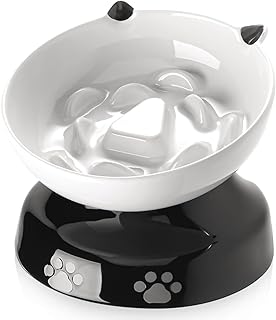
This ceramic elevated bowl features a tilted, flower-column design that makes meals more engaging while reducing neck strain. It accommodates both dry and wet foods and provides a raised eating position that can help with digestion. Ceramic construction offers durability and odor resistance, though it may be heavier and more fragile than silicone options. Choose this if you want an elevated feeding solution with a visually appealing, pet-friendly design.
- Best for cats needing elevated feeding posture with reduced neck strain.
- Better for cats that tolerate ceramic surfaces and appreciate a decorative bowl.
- Limitations: Ceramics can chip if dropped; handle with care.
Raised Slow Feeder Cat Bowl – Ceramic

This raised, titled ceramic bowl promises stable placement and a slow-feeding maze to help prevent vomiting and bloating. The ceramic material offers durability and odor resistance, while the flower petal design adds a playful aesthetic. It’s best for cats that benefit from a higher feeding angle and a calmer pace. One caution: ceramic bowls can be heavier and may require a sturdier feeding surface to prevent tipping.
- Best for cats needing a stable, slow-feeding ceramic option.
- Better for households seeking an artistic, pet-safe design with practical slow-feeding benefits.
- Limitations: Heavier than some silicone alternatives; ensure surface is non-slip.
2Pcs Silicone Slow Feeder Bowls – Green/Blue

This dual-pack offers an affordable, flexible option with a flower vortex design meant to slow feeding and support digestion. The thicker, 100% food-grade silicone construction is durable, with a non-slip base to prevent movement during meals. It’s microwave- and fridge-safe for easy meal prep and storage. Best for households needing a cost-effective, easy-to-clean slow feeder that can serve multiple pets. A potential limitation is that silicone color fading can occur with heavy use or high heat.
- Best for budget-conscious buyers needing a two-pack solution.
- Better for cats that respond well to interactive, floral vortex patterns.
- Limitations: Colors may fade with extended heat exposure; verify colorfast options if aesthetics matter.
Buying Guide: Slow Eating Cat Bowls
What material should you choose?
Silicone bowls are flexible, easy to clean, and dishwasher-safe, with excellent non-slip properties. Ceramic bowls offer stability and durability, with a premium look and odor resistance but can be heavier and prone to chipping. Plastic bowls are often cheapest but may retain odors and harbor bacterial buildup if not cleaned properly. For most buyers, silicone or ceramic bowls strike a balance between safety and functionality.
What design features matter?
Look for maze or spiral patterns that require cats to work for their food, which slows eating. Non-slip bases help prevent spills. Elevated designs can reduce neck strain and promote comfortable swallowing, especially for older cats. Consider whether you need a dual-pack option for households with multiple pets.
What foods are compatible?
All listed bowls accommodate dry and wet foods. Some designs are better suited for wet foods due to their maze depth, while others support both types equally. If you have cats with sensitive teeth, ensure the bowl edge is smooth and accessible.
What are the practical limits?
Maze complexity should match your pet’s temperament. Very complex mazes may frustrate very small kittens, whereas older cats may benefit from gentler patterns. Always supervise initial use to ensure your pet adapts without frustration or anxiety.
Maintenance and safety considerations
Regular cleaning is essential to prevent odor buildup and bacteria growth. Check for cracks or chips in ceramic bowls, and replace any damaged items. For silicone bowls, avoid high heat that can warp the design over time and inspect the non-slip base for wear.
Frequently Asked Questions
- Why should my cat use a slow feeder bowl?
To slow eating, promote better digestion, and reduce vomiting or bloating from rapid consumption. - Are slow feeder bowls safe for wet food?
Yes, most are designed to accommodate both dry and wet food; check the specific product’s compatibility. - Can slow feeders help with weight management?
Yes, by slowing intake, they can help control portions and reduce overeating. - What if my cat refuses the maze design initially?
Introduce it gradually with positive reinforcement and consider a simpler design first. - Is elevated feeding better for all cats?
Elevated bowls can reduce neck strain for some cats, particularly seniors, but not all cats prefer elevation.