
Answering the question “which tap water dechlorinator should I use for my fish?” this guide highlights top options that neutralize chlorine, chloramines, and other chemicals so your aquarium water stays safe. Best for new tank setups, daily hobbyists, and those managing multiple tanks, these products help protect gill health, tissue integrity, and overall fish well-being. The following picks are selected for clear labeling, simple dosing, and reliable performance across common freshwater and some marine setups.
| Product | |||
|---|---|---|---|
| API TAP WATER CONDITIONER 16-Ounce | Liquid Conditioner | Home aquariums of any size | Neutralizes chlorine, chloramines, and chemicals |
| API TAP WATER CONDITIONER 1-Ounce | Liquid Conditioner | Small tanks or quick corrections | Compact bottle for on-the-go use |
| API TAP WATER CONDITIONER 4-Ounce | Liquid Conditioner | Medium tanks | Fight gill damage and tissue irritation |
| Aquarium Water Conditioner – 16 fl oz (Natural Rapport) | Detoxifier & Conditioner | Freshwater and light marine setups | Detoxifies ammonia, nitrite, and chloramines |
| Tetra AquaSafe Plus 8.45 oz | Water Conditioner | Freshwater and marine tanks | Protects slime coat and removes heavy metals |
API Tap Water Conditioner 16-Ounce Bottle

Best for: Small to large tanks, hobbyists who need a dependable, single-product solution. This bottle is widely used in both beginner and seasoned setups because it quickly neutralizes chlorine, chloramines, and other tap-water chemicals that can irritate gills and tissues.
Why chosen: It provides a straightforward, one-step approach to making tap water safe, reducing the risk of sudden toxicity when water is added or changed. It’s easy to store and dose consistently across fills.
Caution: Overdosing can reduce water quality margins; follow dosing directions for your tank size.
API Tap Water Conditioner 1-Ounce Bottle

Best for: Quick fixes in small nano tanks or quarantine setups where precise small doses are needed. Ideal for trial runs or temporary adjustments.
Why chosen: The 1-ounce bottle offers precise control for tiny tanks, enabling you to correct tap-water chemistry without introducing large amounts of solution.
Caution: Not ideal for community tanks with many fish if multiple water changes are needed; plan for enough dosing supply.
API Tap Water Conditioner 4-Ounce Bottle

Best for: Medium-sized freshwater tanks or repetitive water-change routines in a home aquarium. It balances safety with a practical bottle size.
Why chosen: The 4-ounce size provides a reliable balance between cost per use and ease of handling for ongoing tank maintenance. It supports gill and tissue protection during water changes.
Caution: Like other dechlorinators, dosages depend on your aquarium volume; avoid guessing to prevent over-treatment.
Aquarium Water Conditioner – 16 fl oz (Natural Rapport)
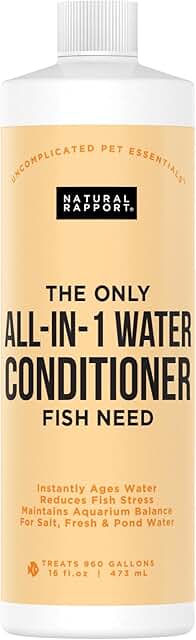
Best for: Those seeking a multipurpose detoxifier with slime-coat and pH-balancing benefits. Suitable for bettas, goldfish, and small tank communities.
Why chosen: It combines chlorine/chloramine removal with pH balancing and electrolyte support, aiming for a broader protective effect in one step. It’s noted as safer for some invertebrates and plants when used as directed.
Caution: Claims include multiple benefits; ensure compatibility with your specific species and tank setup before use.
Tetra AquaSafe Plus 8.45 oz

Best for: Freshwater and marine aquariums needing quick protection of the slime coat and metal detoxification. Suitable for regular water changes in community displays.
Why chosen: AquaSafe Plus emphasizes protective slime-coat enhancement and removal or neutralization of heavy metals, providing a broader safeguard for wounded or stressed fish during changes.
Caution: Not every tank needs metal detoxification; use as directed and avoid unnecessary over-treatment in tanks with metal-sensitive species.
Buying Guide: Tap Water Dechlorinators for Fish
What should I consider before buying?
Water conditioner selection depends on tank size, species, and whether you need quick fixes or ongoing maintenance. For beginners, a single, large bottle with clear dosing instructions reduces the risk of under- or over-treatment. Advanced hobbyists with multiple tanks might prefer smaller bottles for precise dosing across tanks.
What type of dechlorinator is best?
Look for products that neutralize both chlorine and chloramines, as chloramines are common in municipal water and can be harder to remove. Some formulas also detoxify ammonia and heavy metals, which helps maintain water quality during cycling and minor fluctuations.
How does it affect fish health?
Safe tap-water conditioning helps prevent gill damage, tissue irritation, and stress-related disease. Products that protect slime coats can support wound healing and immune function after water changes or transfers.
Should I choose a multi-purpose conditioner?
Multi-purpose conditioners can simplify routine care by addressing several contaminants at once. However, ensure the product is appropriate for your tank’s inhabitants, especially if you have sensitive species or invertebrates.
How often should I treat water?
Treat tap water when performing water changes or when setting up a new tank. Follow the product’s dosing guidelines based on your tank volume, and adjust for unusually hard or soft water as needed.
How do I compare products side by side?
- Volume-to-dose ratio: Larger bottles may be more cost-effective for frequent changes.
- Compatibility: Some formulas are better for freshwater only, others for mixed or marine setups.
- Additional benefits: Slime-coat protection or electrolyte replenishment can be helpful for stressed fish or after transport.
FAQ
- Do all tap-water conditioners neutralize ammonia? Some do, some emphasize ammonia detoxification as a secondary benefit.
- Is it safe to mix multiple conditioners? In general, avoid mixing different products unless the manufacturer states compatibility.
- Can I use these in a quarantine tank? Yes, most products are suitable for quarantine or hospital setups when dosing is appropriate.
- Will these products eliminate the need for any dechlorination at all? They replace dechlorination steps for tap water, but you may still need other water treatment products for specific issues.
- Are there any fish or invertebrates that require special handling? Some sensitive species may have stricter needs; always research species-specific requirements.
In summary, the listed dechlorinators deliver dependable chlorine and chloramine neutralization while supporting fish health during water changes. The best choice depends on tank size, frequency of changes, and whether you value additional benefits such as slime-coat protection or heavy-metal detoxification. Use the buying guide as a quick-reference to pick the product that aligns with your aquarium needs and your maintenance routine.