
Discover a curated selection of wild bird nesting boxes designed to attract bluebirds, owls, wrens, and other backyard birds. Each box emphasizes easy maintenance, durable construction, and safe, natural materials to support local wildlife while blending with your outdoor space. Below are five top picks with notable features to help you choose the right home for your feathered visitors.
| Product | Brand | Top Features |
|---|---|---|
| Wild Wings WWCH3 Cedar Blue Bird Box House | Wild Wings | Ventilation, clean-out door, interior ladder grooves |
| CLACKIBUKVYZ Hummingbird House | CLACKIBUKVYZ | Natural wood, easy hanging, weather-resistant finish |
| Navaris Bird House, Black | Navaris | Pinewood, front-open design, simple to install |
| Owl House for Outdoors (Chuiendi) | Chuiendi | Weatherproof, appropriately sized entrance, quick assembly |
| UUMENHA Durable Cedar Owl House | UUMENHA | Natural cedar, weather-resistant, included wood shavings |
Wild Wings Cedar Blue Bird Box House

The Wild Wings WWCH3 Blue Bird Box is crafted from cedar to provide a natural, durable home for small cavity-nesting birds. Its thoughtful design features air vents that promote proper ventilation through wall and floor openings, helping regulate temperature and humidity in brood season. A clean-out door facilitates easy maintenance between broods, reducing the chance of parasite buildup. Inside the box, grooves just below the entry hole give young birds a path to climb and peek out, supporting feeding behavior and early exploration. The combination of sturdy cedar and user-friendly access makes this a practical choice for backyard habitats.
This model emphasizes longevity and bird safety, with protected entry and interior construction that supports healthy development. Installation is straightforward, and the vivid cedar finish blends well with most garden styles. If you’re aiming to support bluebirds specifically, this box provides a reliable nesting site while offering a simple maintenance routine for busy feeders and observers alike.
Prevue Pet Products BPV105 Sterilized Natural Coconut Fiber Nest Material

While not a nesting box, the Prevue BPV105 coconut fiber nest material plays a supporting role for birds using nesting boxes. It is designed to be dry, absorbent, and dust-free, with manufacturing quality that aims to provide a comfortable nesting bed for birds building nests inside boxes. This material is suitable for nest building and a potential hiding spot within a natural cavity environment. For nest builders, it can help create a warmer, cleaner nesting space during incubation and early chick-rearing.
Hobbyists should assess compatibility with their chosen nesting box and local bird species. Using natural coconut fiber and sterile preparation can aid in reducing odors and moisture, contributing to a healthier nesting environment. Regular replacement after each brood cycle supports hygiene and can extend the usable life of a bird box by maintaining a clean interior.
CLACKIBUKVYZ Hummingbird House

The CLACKIBUKVYZ Hummingbird House is built from natural solid wood, delivering a long-lasting nesting option for small birds deemed attractive to hummingbirds. The box is designed for easy hanging and installation, with a lightweight structure that allows placement in trees, on hooks, or under eaves. Its weather-resistant finish helps protect the box against rain and sun, supporting a stable nesting site through changing seasons. This box suits a garden aiming to attract tiny, high-energy nesters and provides straightforward maintenance for ongoing use.
Consider providing a sheltered location that shields the entrance from prevailing winds and direct sun. The natural wood aesthetic also pairs well with garden flora, offering a visually pleasing addition while supporting local wildlife. Regular checks during nesting season can help ensure the entrance remains accessible to the birds and free from obstructions or excessive debris.
Owl House for Outdoors by Chuiendi

The Chuiendi Owl House is designed for screech and other larger owl species, sized at 15.7×10.5×12.2 inches. It uses high-quality natural wood and is free of chemical coatings and harmful additives to safeguard owl health. The entrance hole is carefully sized to accommodate owls while helping prevent intrusion by smaller animals. The package includes mounting hardware and a video guide, making assembly accessible in roughly ten minutes for beginners. This nesting box aims to provide a secure, weather-resistant home for owls in a backyard or wildlife garden.
Potential buyers should ensure proper placement away from heavy human activity and predators. The design prioritizes ease of access for owls, with a balance between protection and ventilation. Regular checks can ensure the entrance remains unobstructed and that the wood remains in good condition after exposure to the elements.
UUMENHA Durable Cedar Owl House
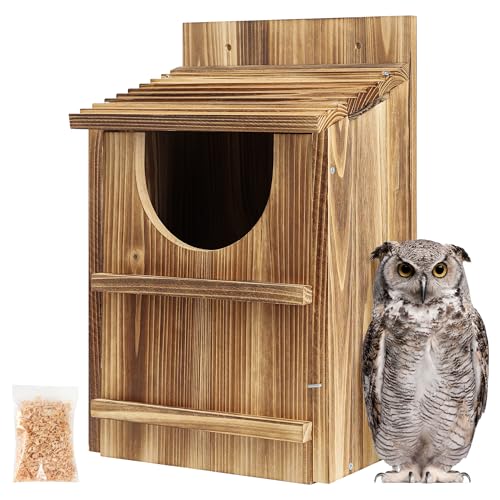
The UUMENHA Cedar Owl House offers a weather-resistant outdoor nesting option crafted from durable cedar. The natural wood design is carbonized rather than painted, reducing chemical exposure and supporting natural habitat health. The product includes a bag of wood shavings to help create a comfortable interior for owls, and the design emphasizes sturdiness with reinforced joints for long-term use. The entrance is sized to accommodate smaller to mid-sized owls while deterring larger predators, making it a robust choice for wild owl habitats.
When selecting this nesting box, consider the climate and whether additional interior padding or ventilation adjustments are needed. Cedar’s natural properties provide resilience, while the included shavings help establish a cozy nesting environment from the start. Regular maintenance will extend the box’s lifespan and support stable occupancy by local owl species.
Buying Guide: Key Considerations For Wild Bird Nesting Boxes
- Target species: Choose boxes sized and designed for the birds you want to attract (bluebirds, owls, hummingbirds, wrens, etc.).
- Materials: Natural woods like cedar reduce chemicals and blend with landscapes; avoid treated woods for most nesting boxes.
- Ventilation and drainage: Proper air vents and drainage holes maintain interior conditions and prevent moisture buildup.
- Entrance hole size: Ensure the entrance matches the species you aim to host while deterring predators and larger competitors.
- Maintenance access: Clean-out doors or removable panels ease cleaning between broods, reducing parasites.
- Mounting and placement: Hang or mount boxes in sheltered locations, away from heavy traffic and predators; consider height, angle, and proximity to perches and feeding areas.
- Weather resistance: Look for weatherproof finishes and durable construction to withstand sun, rain, and wind.
- Safety and cleanliness: Use non-toxic finishes, smooth interior surfaces, and avoid sharp edges or protruding hardware.
- Monitoring and regulations: Respect local wildlife guidelines and avoid disturbing nesting birds during critical periods.
In sum, selecting the right nesting box involves aligning species targets with material quality, ease of maintenance, and durable construction. A well-chosen box, placed thoughtfully, can support healthy bird populations while enhancing the visual appeal and ecological value of your outdoor space.